
Andrea Elia, PhD
2023 Toffler Scholar | Postdoctoral Fellow in Neurodegeneration and Cardiovascular Biology, Temple University
Biography
Andrea Elia’s scientific path began not in a laboratory, but in the tightly woven streets of Naples, Italy—a city shaped by history, contradiction, and endurance. Born and raised in southern Italy, Elia grew up surrounded by family, tradition, and a strong sense of continuity across generations. From an early age, he gravitated toward questions about how the human body works and how disease disrupts systems that are otherwise remarkably resilient.
That curiosity took form early. As a child, Elia read extensively about human biology and medicine, drawn to the idea that science could translate knowledge into relief for others. He envisioned becoming a physician, motivated by a desire to treat disease at its roots. Although he did not gain entry to medical school, he redirected his focus rather than abandoning it—choosing pharmaceutical sciences as a pathway that would allow him to study disease mechanisms while remaining close to therapeutic discovery.
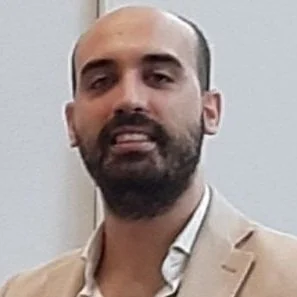
He completed his master’s training in pharmaceutical sciences in Naples, where he conducted experimental research in pharmacology laboratories. There, he focused on cardiovascular disease models, studying how metabolic stress and vascular dysfunction drive progressive organ damage. That work introduced him to the concept that chronic disease rarely affects a single organ in isolation. Instead, failure in one system often reverberates throughout the body.
Biography
Andrea Elia’s scientific path began not in a laboratory, but in the tightly woven streets of Naples, Italy—a city shaped by history, contradiction, and endurance. Born and raised in southern Italy, Elia grew up surrounded by family, tradition, and a strong sense of continuity across generations. From an early age, he gravitated toward questions about how the human body works and how disease disrupts systems that are otherwise remarkably resilient.
That curiosity took form early. As a child, Elia read extensively about human biology and medicine, drawn to the idea that science could translate knowledge into relief for others. He envisioned becoming a physician, motivated by a desire to treat disease at its roots. Although he did not gain entry to medical school, he redirected his focus rather than abandoning it—choosing pharmaceutical sciences as a pathway that would allow him to study disease mechanisms while remaining close to therapeutic discovery.
He completed his master’s training in pharmaceutical sciences in Naples, where he conducted experimental research in pharmacology laboratories. There, he focused on cardiovascular disease models, studying how metabolic stress and vascular dysfunction drive progressive organ damage. That work introduced him to the concept that chronic disease rarely affects a single organ in isolation. Instead, failure in one system often reverberates throughout the body.
Research Focus
Following his master’s degree, Elia pursued doctoral training in cardiovascular and experimental medicine. During his PhD, he investigated how aging alters cardiac innervation - the dense network of nerve fibers that regulate heart rhythm and function. His research demonstrated that physiological aging reshapes this neural architecture, disrupting signaling molecules that typically maintain cardiac stability.
A central focus of his doctoral work involved neurotrophins, including brain-derived neurotrophic factor (BDNF), which had been studied extensively in neurodegenerative diseases but far less in cardiovascular aging. Elia showed that age-related changes in these molecules influence cardiac nerve integrity, revealing unexpected overlap between mechanisms traditionally associated with the brain and those governing heart function.
His work at the boundaries of disciplines has earned him publications in peer-reviewed journals. It has fostered respect among colleagues, inspiring admiration for his innovative approach.
As his doctoral training progressed, Elia became increasingly interested in neurodegenerative disease - not as an isolated neurological phenomenon, but as a systemic condition intertwined with vascular and metabolic health. Epidemiological evidence consistently shows that patients with Alzheimer’s disease and related dementias frequently experience cardiovascular disease. In contrast, individuals with heart disease face an increased risk of cognitive decline. Yet most research treated these conditions separately.
Elia chose to step directly into that gap.
He moved to the United States to pursue postdoctoral training in a laboratory specializing in Alzheimer’s disease and neurodegeneration. There, he began building an independent research line that bridges cardiovascular biology and neurodegenerative pathology, offering a novel perspective on how these systems interact and informing potential integrated treatments.
Elia’s current research centers on amyloid-beta, a protein widely known for its accumulation in the brains of individuals with Alzheimer’s disease. His work explores a less-examined question: what happens when amyloid-beta escapes the brain?
Using transgenic animal models, Elia has generated evidence that amyloid-beta does not remain confined to neural tissue. Instead, it travels through the bloodstream, interacts with vascular structures, and accumulates in peripheral organs, including the heart. In these models, amyloid-beta disrupts endothelial cells, stiffens blood vessels, and infiltrates cardiac tissue—leading to impaired cardiac function.
These findings challenge long-standing assumptions that Alzheimer’s pathology belongs exclusively to the brain. Elia’s data suggest that neurodegeneration may exert systemic effects, including cardiac dysfunction, which could inform new therapeutic strategies for both neurological and cardiovascular health.
At the molecular level, his work examines how amyloid-beta alters cardiac nerve fibers, disrupts neurotrophic signaling, and accelerates degenerative remodeling in heart tissue. He studies these processes using a combination of animal models, molecular profiling, and functional cardiac assessments, including advanced imaging and physiological measurements.
Crucially, Elia does not stop at observation. His research also explores therapeutic intervention. He investigates FDA-approved compounds that have shown neuroprotective effects in Alzheimer’s models, testing whether these same agents can preserve cardiac function in the presence of amyloid pathology. By focusing on drugs with existing safety profiles, his work moves deliberately toward translational relevance.
The Karen Toffler Charitable Trust Toffler Scholar Award marked a turning point in this trajectory. The funding enabled Elia to expand his dataset, deepen mechanistic analyses, and conduct functional studies that would otherwise have remained out of reach at the postdoctoral stage. It also enabled him to present his work at major scientific meetings spanning both neuroscience and cardiovascular research - an uncommon but intentional choice.
The award affirmed the value of his cross-disciplinary approach at a moment when early-career researchers often feel pressure to narrow their scope.
Looking ahead, Elia aspires to develop an independent program that redefines neurodegenerative disease as a multi-organ condition, inspiring hope for new therapeutic avenues.
Mentorship is central to Elia's vision; he aims to train scientists who think across boundaries, fostering a sense of community and shared purpose among peers and students.
– Andrea Elia, PhD
For Elia, science remains inseparable from values shaped early in life: perseverance, responsibility, and loyalty to the communities that make individual achievement possible. Though he works far from his family in Italy, he speaks often of their support and of the resilience he draws from staying connected across distance.
In his view, scientific advancement mirrors the human condition itself - complex, interdependent, and shaped by forces that rarely act alone.