
Biography
From an early age, Tirth Patel learned how to sit quietly with curiosity. An only child growing up in western India, he spent long stretches immersed in books, sometimes so absorbed that his parents had to limit how long he could read at the dinner table. Stories, ideas, and unanswered questions filled his world early, laying the foundation for a life devoted to understanding how complex systems work and, eventually, how they break down.
Patel grew up in Gujarat in a family steeped in medicine. Both of his parents practiced dentistry, and while he deeply respected the profession, he knew early on that his own interests lay elsewhere. Watching procedures in his mother’s dental office clarified that his fascination was not with teeth but with ideas, especially those that explain how living systems function beneath the surface.
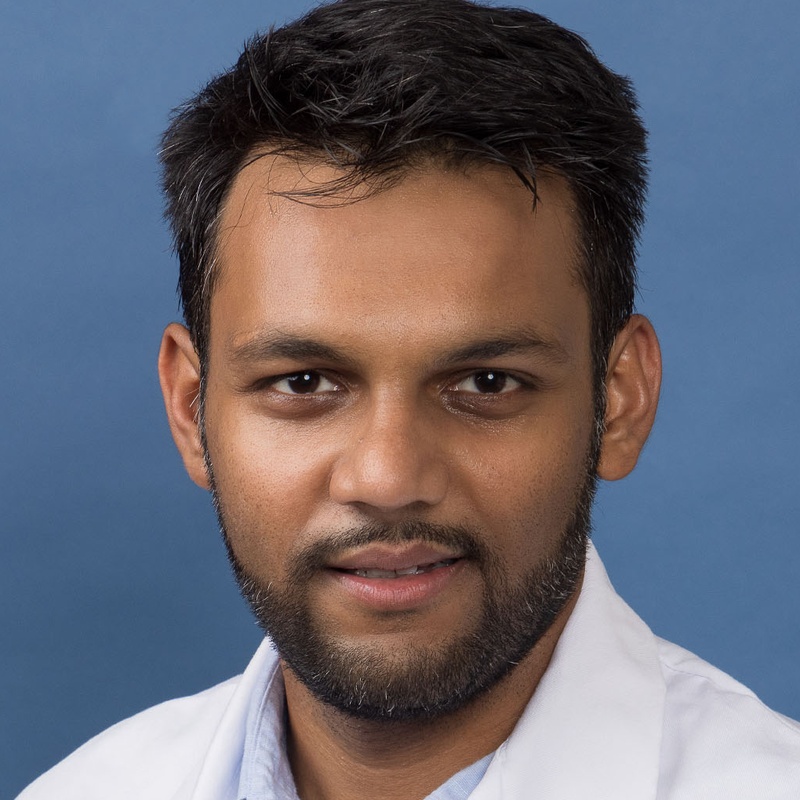
Biography
From an early age, Tirth Patel learned how to sit quietly with curiosity. An only child growing up in western India, he spent long stretches immersed in books, sometimes so absorbed that his parents had to limit how long he could read at the dinner table. Stories, ideas, and unanswered questions filled his world early, laying the foundation for a life devoted to understanding how complex systems work and, eventually, how they break down.
Patel grew up in Gujarat in a family steeped in medicine. Both of his parents practiced dentistry, and while he deeply respected the profession, he knew early on that his own interests lay elsewhere. Watching procedures in his mother’s dental office clarified that his fascination was not with teeth but with ideas, especially those that explain how living systems function beneath the surface.
Research Focus
That habit of inquiry followed him across continents. When Patel was in high school, his family immigrated to the United States, beginning a period of rapid transition and movement. The family initially settled in Northern California near extended relatives while his parents worked through professional licensing. From there, they moved to Minnesota, where Patel completed high school, before ultimately settling in Southern California. The geographic shifts were disruptive, but they also sharpened his adaptability and resilience, traits that would later prove essential during the long and uncertain years of scientific training.
In school, Patel thrived academically. He enjoyed every subject and quickly became known as the student who leaned forward in his chair, the textbook already open. Teachers nurtured his curiosity, recommending books and encouraging exploration beyond the curriculum. Although he excelled across the board, a critical realization emerged during high school and college. Medicine and science did not have to exist on separate tracks. Caring for patients and investigating disease mechanisms could inform one another, forming a more complete way of understanding human health.
Patel attended the University of California, Los Angeles, where he majored in microbiology and immunology. During his undergraduate years, he joined a research laboratory that was initially unrelated to neuroscience and discovered the distinctive thrill of scientific discovery. He found himself drawn to the quiet intensity of research: asking a precise question, following it deeply, and realizing that he might be the first person to see a particular result.
“There were moments when I realized I might be the only person who had ever seen a particular result,” he says. “Even if it was something small, that was incredibly exciting.”
Despite this growing interest, Patel initially chose a conventional medical path. He entered medical school at Washington University in St. Louis as an MD student, unsure whether he was ready to commit to the long, demanding combined MD-PhD track. That uncertainty changed during a pivotal summer research experience in the laboratory of Dr. David Holtzman, a neurologist-scientist focused on Alzheimer’s disease. What left the strongest impression was not only the science but the mentorship. Holtzman led a large, internationally recognized lab while remaining present, thoughtful, and generous with his time.
“That was the first time I could really see what this kind of career might look like,” Patel says. “It made me think this is a path I could imagine myself on.”
Neurology soon became Patel’s intellectual home. Among all medical specialties, it stood out as the field still wrestling with its most fundamental questions. Many neurological diseases lacked effective treatments, not because of neglect, but because the brain remained so incompletely understood. For Patel, that uncertainty represented opportunity.
He joined a translational Alzheimer’s disease laboratory for his doctoral work, studying how toxic proteins accumulate and spread in the brain. His research focused on tau, a neuronal protein whose abnormal aggregation drives Alzheimer’s disease and a family of related neurodegenerative disorders known as tauopathies. He completed his PhD in 2018 and his MD in 2020, then returned to UCLA for neurology residency, which he completed in 2024.
Residency demanded his full attention and temporarily pulled him away from bench science, yet the pause only reinforced his commitment. Many of the central questions he had been asking years earlier remained unresolved.
Today, Patel is a physician-scientist at UCLA working in the laboratory of Dr. Jason Hinman, where he explores how the recently discovered meningeal lymphatic system influences brain health and neurodegenerative diseases, highlighting a rapidly evolving neuroscience frontier.
For centuries, scientists assumed the brain lacked a lymphatic system. That belief changed only within the last decade, when researchers discovered lymphatic vessels in the membranes surrounding the brain. These vessels help drain fluid, waste products, and immune cells from the central nervous system into the body’s broader immune circulation. Patel’s work asks a deceptively simple but profound question. How does tau, a protein produced inside neurons, travel from the brain into the bloodstream?
In earlier research, Patel showed that disrupting meningeal lymphatic vessels in animal models reduces the amount of tau that exits the brain and increases its accumulation within it. Yet the cellular mechanisms behind this process remain unknown. Supported by the Toffler Scholar Award, Patel’s current project focuses on the lymphatic endothelial cells that line these vessels.
He examines how these cells respond to increasing tau pathology, which genes or receptors they activate to promote clearance, and how the system adapts when lymphatic function declines over time.
He aims to identify new therapeutic targets that enhance protein clearance and slow neurodegeneration, reflecting his dedication to translating research into treatments for neurodegenerative diseases.
The Toffler Scholar Award, his first major grant as an emerging independent investigator, recognizes his potential and supports his innovative research on tau clearance, marking a significant milestone in his career.
“Being funded for potential, rather than just completed work, makes an enormous difference at this stage,” he says.
Throughout his journey, Patel has remained grounded in the human stakes of his work. Advances in Alzheimer’s disease diagnosis, particularly blood-based biomarkers, have transformed the field, creating both urgency and ethical complexity. His dual training allows him to navigate both clinical care and discovery science with nuance and responsibility.
Outside the laboratory and clinic, Patel brings the same curiosity to public engagement. He co-hosts Recreational Science, a podcast that uses humor and storytelling to make scientific research accessible to broader audiences.
Looking ahead, Patel aims to build a career that integrates patient care, discovery science, and mentorship. He envisions a future where understanding how the brain clears toxic proteins opens new doors for diagnosing, treating, and ultimately preventing neurodegenerative disease. At its core, his work reflects the same impulse that guided him as a child turning pages late into the evening: a commitment to understanding what lies beneath the surface, and to following questions wherever they lead.