
Judy Lee, PhD Candidate
2024 Toffler Scholar | PhD Candidate, Cellular and Molecular Medicine, Johns Hopkins University School of Medicine
Biography
Judy Lee’s path into science began long before she understood what research was. Born in Madison, Wisconsin, to parents who had come from Korea for graduate study, she spent her earliest years immersed in an academic environment shaped by perseverance, curiosity, and discipline. Her father pursued legal studies, while her mother began a demanding PhD program in developmental biochemistry, leaving Lee primarily in her mother's care during those years.
Lee’s earliest memories are not of classrooms, but of laboratories. As a toddler, she accompanied her mother to the lab, quietly observing technicians at work. She watched researchers maintain cell cultures, run gels, and repeat experiments with careful precision, even though she did not yet understand their purpose.
“At the time, I thought it was strange that my mom would take red media out of cells just to put new media back in,” Lee recalls. “I didn’t understand it at all. But I was fascinated by watching people do science.”
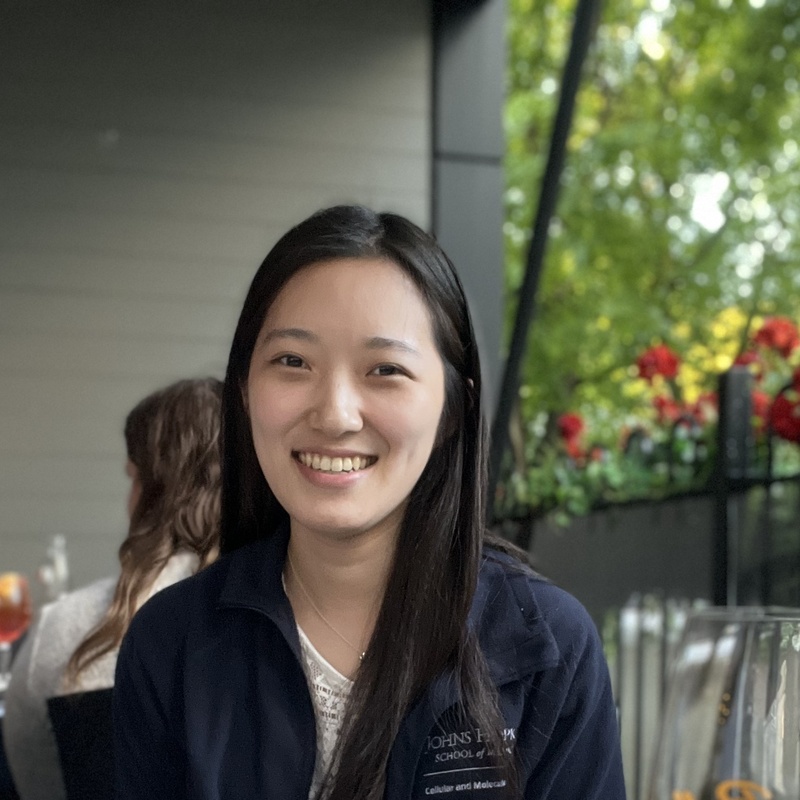
The lab became a familiar and welcoming place. Researchers encouraged her curiosity, gave her space to read and draw, and allowed her to witness science as a lived practice rather than an abstract concept. That early exposure left a lasting impression. Without realizing it, Lee grew comfortable in environments defined by experimentation, uncertainty, and discovery.
Biography
Judy Lee’s path into science began long before she understood what research was. Born in Madison, Wisconsin, to parents who had come from Korea for graduate study, she spent her earliest years immersed in an academic environment shaped by perseverance, curiosity, and discipline. Her father pursued legal studies, while her mother began a demanding PhD program in developmental biochemistry, leaving Lee primarily in her mother's care during those years.
Lee’s earliest memories are not of classrooms, but of laboratories. As a toddler, she accompanied her mother to the lab, quietly observing technicians at work. She watched researchers maintain cell cultures, run gels, and repeat experiments with careful precision, even though she did not yet understand their purpose.
“At the time, I thought it was strange that my mom would take red media out of cells just to put new media back in,” Lee recalls. “I didn’t understand it at all. But I was fascinated by watching people do science.”
The lab became a familiar and welcoming place. Researchers encouraged her curiosity, gave her space to read and draw, and allowed her to witness science as a lived practice rather than an abstract concept. That early exposure left a lasting impression. Without realizing it, Lee grew comfortable in environments defined by experimentation, uncertainty, and discovery.
Research Focus
After her mother completed her PhD and postdoctoral training, Lee returned to Korea, where she spent most of her childhood and adolescence. She remained academically driven and gravitated toward science, though her interests initially leaned toward chemistry. She valued the structure and predictive power of chemical principles, which appealed to her preference for logic over memorization.
During her undergraduate studies, Lee pursued a dual major in chemistry and biology. While chemistry provided theoretical grounding, biology introduced her to the complexity of living systems. She became increasingly interested in how cells adapt, change, and respond to stress. That curiosity led her to pursue a master’s degree focused on hypoxia, the low-oxygen conditions commonly found in tumors.
In her master’s research, Lee studied molecular pathways activated in hypoxic environments, particularly the regulation of hypoxia-inducible factors (HIF) needed to adapt and survive under oxygen-deprived conditions. She examined how a certain receptor protein may be a target in inhibiting HIF-mediated hypoxic responses to suppress cancer metastasis, gaining deep experience in molecular biology and cellular signaling.
As her training progressed, Lee began to seek a more translational perspective. She wanted to connect molecular mechanisms to human disease more directly. That motivation brought her back to the United States to pursue doctoral training in the Cellular and Molecular Medicine program at Johns Hopkins University, a program designed to bridge basic science and clinical insight.
At Johns Hopkins, Lee joined the laboratory of Dr. Michael Kornberg, a physician–scientist whose work focuses on neuroimmunology and metabolism. The transition marked a significant shift. After years of studying cancer biology, Lee entered the field of neuroscience, drawn by questions about how immune and metabolic processes shape brain health.
“I had always been interested in the brain,” Lee says. “This felt like the right place to bring everything together.”
Lee’s doctoral research centers on multiple sclerosis, a chronic autoimmune disease in which immune cells attack myelin, the insulating layer that allows neurons to transmit signals efficiently. In MS, inflammation destroys myelin and the oligodendrocytes that produce it, leaving behind demyelinated lesions that disrupt neural communication and lead to cognitive and motor impairment.
Current MS therapies primarily suppress immune activity to prevent future attacks. While these treatments reduce inflammation, they do little to repair existing damage. Patients often continue to experience lasting disabilities because demyelinated lesions fail to remyelinate.
Lee’s work addresses this gap. She studies how cellular metabolism influences oligodendrocyte survival and remyelination in inflammatory environments. Her research asks whether metabolic pathways can be manipulated to promote repair rather than merely suppress immune damage.
A defining moment in Lee’s training came when she shadowed Dr. Kornberg in the clinic and met a young woman newly diagnosed with MS. The patient, in her early twenties, described losing her vision, balance, and independence. Her symptoms rapidly progressed, forcing her to leave school and work.
“When Dr. Kornberg asked what she wanted most, she said, ‘I just want my life back,’” Lee recalls. “That stayed with me.”
The encounter reinforced the urgency of Lee’s research. It transformed abstract molecular questions into human ones and sharpened her focus on recovery and quality of life.
In the lab, Lee uses a combination of in vivo mouse models and molecular analyses to study demyelination and inflammation together. She works with established models that induce both immune activation and myelin loss, allowing her to study how metabolic interventions influence repair. Her work extends beyond oligodendrocytes to include microglia and astrocytes, recognizing that neuroinflammation involves coordinated responses across multiple cell types.
Lee also integrates lipidomics and RNA sequencing into her work to examine how inflammatory conditions alter lipid metabolism in neural cells. These approaches allow her to identify metabolic signatures associated with damage and recovery, providing potential targets for future therapeutic development.
In 2024, Lee received a Toffler Scholar Award, which provided critical support during the final phase of her doctoral training. The award allows her to complete ongoing animal studies, pursue advanced lipidomic analyses, and present her work at scientific conferences. It also gives her greater independence as she prepares to transition to postdoctoral training.
Beyond financial support, the recognition reinforced her confidence as an emerging scientist.
“Receiving the Toffler Scholar Award made me feel that my work mattered. It validated the idea that these questions are worth asking.”
— Judy Lee, PhD Candidate
Looking ahead, Lee plans to pursue postdoctoral training in academia, continuing to study neuroimmunology and cellular metabolism. She hopes to build a career that combines rigorous basic science with translational relevance, ultimately contributing to therapies that restore function rather than halt disease progression.
Equally important to her is mentorship. Inspired by her own early exposure to science, Lee hopes to support and encourage the next generation of scientists, particularly those who may not initially see themselves reflected in research careers.
For Lee, science remains both deeply personal and profoundly collaborative. It reflects a life shaped by curiosity, resilience, and a commitment to improving human health through understanding the most fundamental processes of life.
“I want to help people get their lives back,” she says. “That’s what drives me.”