
Rachel Bennett, PHD
2025 and 2024 Toffler Scholar | Associate Professor at Harvard Medical School and Massachusetts General Hospital
A Spark in the Desert
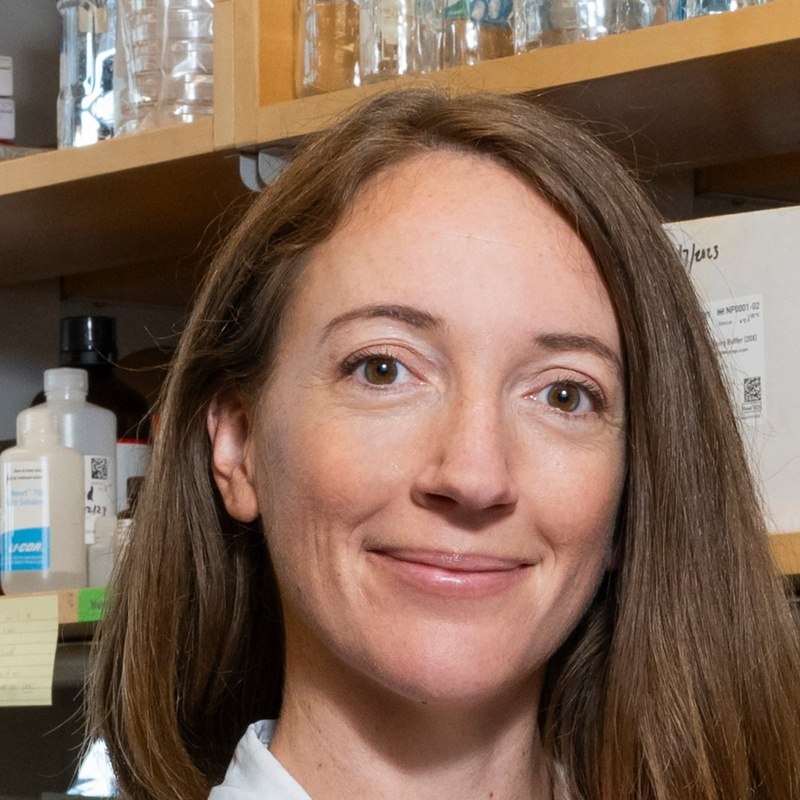
A Spark in the Desert
Dr. Rachel Bennet's scientific path began far from the bustling research labs of Harvard or the icy winters of Boston. She grew up under the clear desert skies of Arizona, in a family shaped by military discipline and the expansive spirit of the American Southwest. Her father, a U.S. Air Force pilot, instilled resilience; the mountainous terrain around Luke Air Force Base offered endless hikes and quiet places to think. Rachel joined a field trip to a local brain bank as a curious high schooler. There, she gazed at a microscope slide revealing amyloid beta plaques. The image of disease-tangible and visible-left her spellbound. It wasn't just a concept in a textbook. It was real. And it needed solving.
From Genes to the Brain
Rachel pursued molecular biology at Arizona State University, initially drawn by the promise of genetics. But a fateful turn into Dr. Steven Hoffman's lab changed her trajectory. Hoffman was one of the few neuroscientists at ASU who studied how lupus antibodies affect brain function. Rachel became captivated by the intersection of immune dysfunction and brain pathology. From there, she entered graduate school at Washington University in St. Louis, where she studied traumatic brain injury. Under the mentorship of Dr. David Brody, she worked closely with clinicians to understand how repetitive concussions impact brain health, gaining insight into how neurological damage unfolds over time.
“To visualize disease and the cells it touches-not on a page, but in motion-that changed everything”
- Rachel Bennett, PHD
A New Frontier with Tau
The turning point came when Rachel read groundbreaking studies on chronic traumatic encephalopathy (CTE), a tau-related neurodegenerative disease often found in football players. Intrigued by tau protein's role in neurodegeneration, she contacted Dr. Brad Hyman at Massachusetts General Hospital-a luminary in the field. She first joined his lab briefly as a student, learning advanced imaging techniques, and returned after graduation for her postdoctoral work.
Her passion found its match in two-photon microscopy, an advanced imaging method that allows real-time, in-depth visualization of living brain tissue. In her own words, Rachel feels most alive when peering into the brain's hidden landscapes: "To visualize disease and the cells it touches-not on a page, but in motion-that changed everything."
A Discovery Years in the Making
One of Rachel's most powerful insights emerged after years of watching tau tangles form and neurons disappear. Contrary to the prevailing hypothesis that tangles directly cause neuron death, her longitudinal imaging showed something surprising: neurons that died usually did not contain tangles. Nearly 95% of the vanished neurons lacked the fibrillary tangles previously considered toxic. This contradiction to long-held assumptions forced Rachel to look deeper.
She noticed a strange pattern. The perished neurons were spatially isolated, farther from their neighbors than typical neurons. Even weeks before their death, these doomed cells swelled, expanding their volume by 20 to 30 percent. This suggested a prolonged, stress-induced deterioration rather than a sudden apoptotic event.
Supported by the Toffler Trust
The Karen Toffler Charitable Trust stepped in at a critical juncture. Rachel had an idea for a bold next step: to use spatial transcriptomics to capture gene expression within human neurons showing this "death phenotype." But at $12,000 per slide, this technology was financially out of reach. The Trust's grant changed that.
With the funding, Rachel began comparing these spatially isolated, swelling neurons in mouse models and postmortem human brain tissue. Using spatial transcriptomics, she could now capture a gene-level snapshot of the exact moment these neurons entered a pre-death state. Her goal? Identify molecular signatures that reveal which pathways drive neuron death.
Toward New Pathways and Possibilities
Rachel's research is no longer just about observing. She's working toward intervention. Her next steps include returning to the mouse models and testing potential therapeutics, including existing cancer drugs and gene-targeting viral vectors, to block the cell death pathways she's uncovering. If her hypothesis holds, this could lead to a new generation of Alzheimer's therapies aimed not at plaques or tangles, but at the molecular events that precede neuron death.
And she's not stopping there. Rachel envisions a future where we can identify at-risk neurons and monitor them in real time through non-invasive imaging. Collaborating with imaging experts at Harvard and beyond, she hopes to transform these microscopic insights into clinical tools. If successful, her work could redefine how we diagnose and treat Alzheimer's, offering a new beacon of hope in a field long clouded by false leads and failed drug trials.
Personal Stakes: Rachel admits that her motivation isn't just academic. "I'm a woman in science," she said, "and I'm walking toward the age when this disease becomes a real risk for me and for the women I love." Her research into neuron death and its relationship to aging is as much about the future of neuroscience as it is about the future of those around her.
With quiet determination, technical brilliance, and a touch of awe that began with a high school field trip, Rachel is bringing light to one of the darkest mysteries of the brain. Her work, supported by the Karen Toffler Charitable Trust, reminds us that progress comes not just from massive breakthroughs, but from the careful, courageous effort to ask questions no one else is asking—and to look, patiently and persistently, for answers.