
Elizabeth Rose Mayeda, PhD, MPH
2024 and 2019 Toffler Scholar | Assistant Professor of Epidemiology, UCLA
Biography
Elizabeth Rose Mayeda does not begin with the brain. She begins with people—where they grow up, the opportunities they receive, and the structures that shape their lives long before disease appears.
Her work sits at the intersection of epidemiology and equity, asking a deceptively simple question: why do some populations experience faster cognitive decline than others? Recognizing these social factors can help better understand the diverse experiences shaping aging.
“I’m interested in what sets people on different trajectories decades before dementia begins,” she explains.
That perspective has defined her career.
Mayeda trained in integrative biology and public health at the University of California, Berkeley, where she first saw how population-level patterns could reveal hidden drivers of disease. She deepened that focus at the Columbia University Mailman School of Public Health, earning her MPH in Epidemiology, and later at the University of California, San Francisco, where she completed her PhD in Epidemiology and Translational Science. At UCSF, she also completed postdoctoral training, refining the tools she would use to study aging across diverse populations.
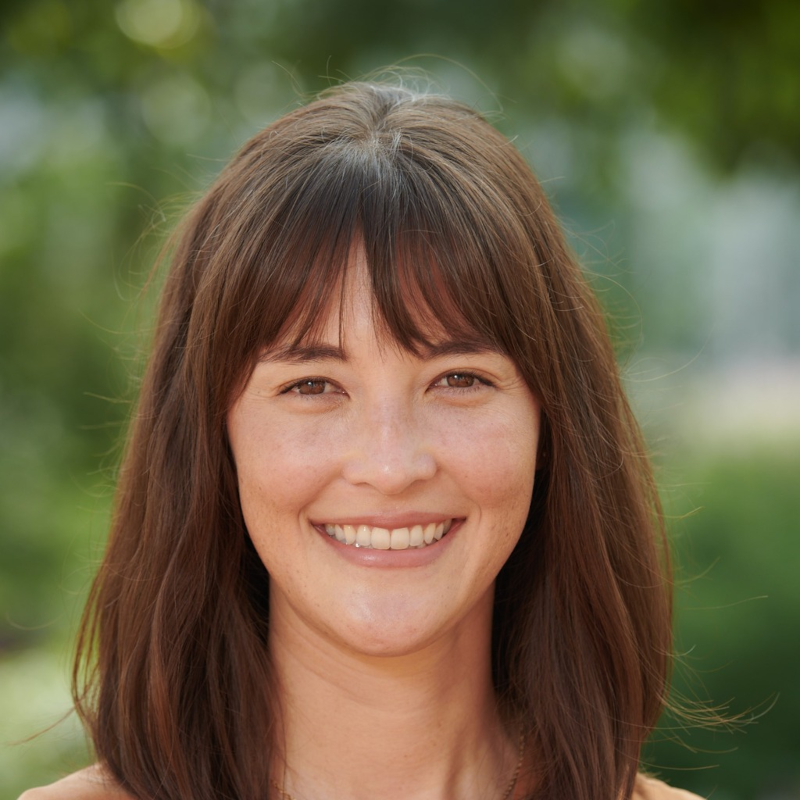
In 2018, she joined the faculty at UCLA, where she now leads a research program focused on cognitive aging, Alzheimer’s disease, stroke, and the broader determinants of healthy aging.
Biography
Elizabeth Rose Mayeda does not begin with the brain. She begins with people—where they grow up, the opportunities they receive, and the structures that shape their lives long before disease appears.
Her work sits at the intersection of epidemiology and equity, asking a deceptively simple question: why do some populations experience faster cognitive decline than others? Recognizing these social factors can help better understand the diverse experiences shaping aging.
“I’m interested in what sets people on different trajectories decades before dementia begins,” she explains.
That perspective has defined her career.
Mayeda trained in integrative biology and public health at the University of California, Berkeley, where she first saw how population-level patterns could reveal hidden drivers of disease. She deepened that focus at the Columbia University Mailman School of Public Health, earning her MPH in Epidemiology, and later at the University of California, San Francisco, where she completed her PhD in Epidemiology and Translational Science. At UCSF, she also completed postdoctoral training, refining the tools she would use to study aging across diverse populations.
In 2018, she joined the faculty at UCLA, where she now leads a research program focused on cognitive aging, Alzheimer’s disease, stroke, and the broader determinants of healthy aging.
Rethinking Alzheimer’s Through Work, Gender, and Experience
From the outset, Mayeda challenged a dominant narrative in Alzheimer’s research. Scientists have long observed that more women than men live with dementia. Much of the field has focused on biological explanations-hormones, genetics, or sex-specific brain differences. Mayeda does not dismiss those factors, but she insists they tell only part of the story.
“There are more women with dementia in large part because more women live to older ages,” she notes. “But that doesn’t mean social factors aren’t shaping risk in important ways.”
Her 2019 Toffler Scholar project reframed the question entirely. Instead of asking what happens inside the brain late in life, she examined how women’s work and family experiences across early and mid-adulthood shape memory decades later.
Using data from the Health and Retirement Study, a nationally representative study of US older adults, Mayeda and her collaborators reconstructed life trajectories—year by year—capturing whether women participated in paid work, raised children, or lived with a partner. They then applied sequence analysis to identify patterns across thousands of lives, illustrating her rigorous empirical approach.
The findings were striking.
Women who participated in the paid workforce showed slower rates of memory decline later in life. This finding underscores the importance of social engagement, which can inspire your confidence in the broader implications of her research.
“It suggested that something about workforce participation itself may be protective,” Mayeda explains.
The mechanism remains an open question. Paid work may provide cognitive stimulation, financial independence, or social engagement. It may also offer agency-an ability to shape one’s environment in ways that influence long-term health.
What matters is the implication: preventing Alzheimer’s disease may require more than medical intervention. It may necessitate rethinking social structures-such as employment policies and community resources-that shape cognitive resilience across the lifespan, informing public health strategies and policy development.
“Dementia doesn’t begin when memory fails. It reflects a lifetime of exposures and experiences.”
– Elizabeth Rose Mayeda, PhD, MPH
That insight propelled Mayeda’s broader research agenda. She began examining how early-life conditions-education, social resources, and environment-leave lasting imprints on cognitive aging.
In one line of work, she explored dementia risk among Asian American populations, focusing on differences across Asian ethnic groups. Her findings revealed that dementia risk varies significantly depending on early-life context, even among individuals who later share similar environments in the United States.
“The biology of sex is constant across contexts,” she says. “But gender and social experience are not.”
In another project, supported by National Institutes of Health funding, Mayeda investigates how elevated blood pressure across adulthood contributes to dementia risk and whether it helps explain racial and ethnic disparities. She also leads an NIH R01 study examining dementia risk factors in a large, diverse cohort of Asian Americans-one of the most underrepresented populations in aging research.
Across these efforts, a consistent theme emerges: the roots of cognitive decline extend far beyond the clinic.
“Childhood, education, and early opportunities shape cognitive trajectories in ways we’re only beginning to understand,” she explains.
Challenging the Data: Who Counts in Alzheimer’s Research
Mayeda’s 2024 Toffler Scholar support builds on this foundation. Still, it shifts toward a different, equally critical challenge: how research itself may distort our understanding of disease.
She has become increasingly concerned about selection bias in Alzheimer’s studies-specifically, who participates in research and who does not. Addressing these biases can motivate more inclusive research efforts.
“Most studies rely on highly selected samples,” she explains. “People who are highly educated, who trust the medical system, and who can access major research centers.”
These participants do not represent the broader population. As a result, the conclusions drawn from these studies may not generalize.
To address this, Mayeda applies advanced statistical methods-known as transportability techniques-to adjust for differences between study samples and the populations they aim to represent. Her work tests whether accounting for these biases changes core assumptions in Alzheimer’s research, including the role of key biomarkers such as amyloid.
“It raises a fundamental question,” she says. “Are we drawing conclusions about disease based on samples that don’t reflect the people we want to help?”
This work shifts the focus from studying disease to examining how researchers construct knowledge about disease.
If successful, it could reshape how Alzheimer’s research is designed, interpreted, and applied.
Mayeda’s career reflects a broader evolution in neuroscience and public health. The field is moving from a narrow focus on biological mechanisms toward a more integrated understanding of health—one that includes social context, environment, and lived experience.
Her work stands at that frontier.
She does not separate biology from society. Instead, she asks how they interact across time, shaping risk long before symptoms emerge.
“Dementia doesn’t begin when memory fails,” she says. “It reflects a lifetime of exposures and experiences.”
Through her research, Mayeda is helping redefine what it means to prevent disease-not just by treating pathology, but by understanding and reshaping the conditions that give rise to it.