
Jahn O'Neil, PhD
BIOGRAPHY
Dr. Jahn O'Neil's path to neuroscience didn't begin in a high-tech lab or a prestigious lecture hall. It started on the island of St. Croix in the U.S. Virgin Islands.
In her early childhood, her father worked for Hess Oil in the Virgin Islands, one of the largest oil refineries in the Western Hemisphere at the time. The family moved between the Caribbean and New York City. That change taught Jahn to adapt quickly, but her fascination with the human body remained steady. "I was a voracious reader," she said, "and I've always been deeply curious." That curiosity found direction in high school when she chose the academic track and enrolled in a biology course taught by Ms. Smith, a gifted physiologist whose passion for science lit a fire in her students.
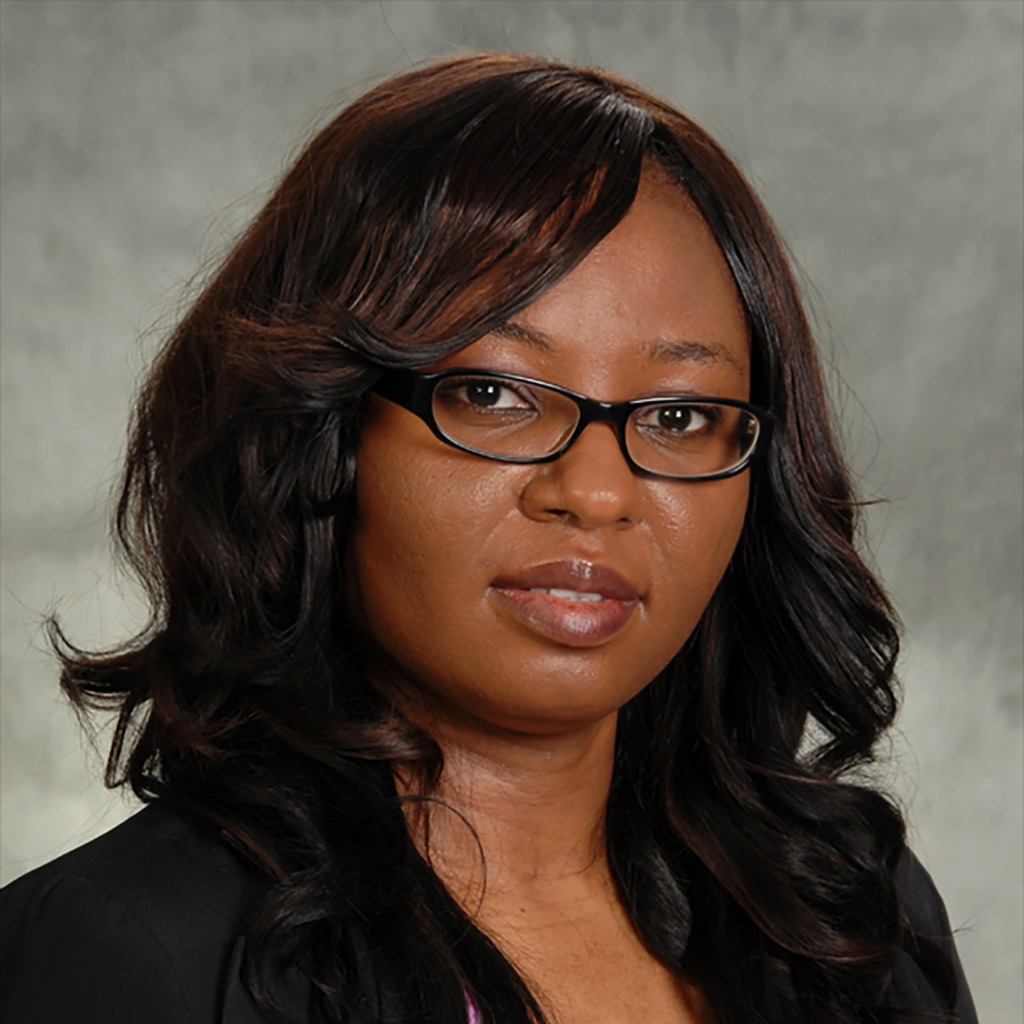
From St. Croix to Scientific Discovery
Dr. Jahn O'Neil's path to neuroscience didn't begin in a high-tech lab or a prestigious lecture hall. It started on the island of St. Croix in the U.S. Virgin Islands.
In her early childhood, her father worked for Hess Oil in the Virgin Islands, one of the largest oil refineries in the Western Hemisphere at the time. The family moved between the Caribbean and New York City. That change taught Jahn to adapt quickly, but her fascination with the human body remained steady. "I was a voracious reader," she said, "and I've always been deeply curious." That curiosity found direction in high school when she chose the academic track and enrolled in a biology course taught by Ms. Smith, a gifted physiologist whose passion for science lit a fire in her students.
A Path Shaped by Passion-and Resilience
Jahn took that passion to the University of the Virgin Islands, where she majored in biology and joined the NIH-funded MARC program. During high school, a close family friend was diagnosed with early-onset Alzheimer's disease. The devastation Jahn witnessed stayed with her, pulling her toward neuroscience. When she entered the PhD program at Howard University, she found her home in a lab studying Alzheimer's disease and depression. "It felt like the work I was meant to do," she said.
From Cochlear Implants to Cognitive Decline
Her postdoctoral work took her in a new direction-but not far from her central interest in the brain. At Johns Hopkins University, she studied how cochlear implants reshape brain plasticity in children with congenital deafness. "It was still about the brain," she explained. "It helped me see how early interventions can permanently alter neural circuits."
After briefly working in nonprofit grant writing, Jahn returned to Howard University-first as an instructor, then as an assistant professor. Now, she runs her lab and leads her research.
Investigating the Genetics of Risk and Resilience
Dr. O'Neil's lab investigates how APOE4-the most significant genetic risk factor for Alzheimer's disease-interacts with dietary salt to influence cognitive health. Using APOE knock-in mouse models, she's examining whether salt-induced hypertension worsens memory, spatial learning, and neuroinflammation.
Early findings show promise: APOE4 mice on a low-sodium diet performed comparably to APOE3 mice, suggesting that dietary changes may mitigate genetic risk. "Even with their genetic risk, diet made a difference," Jahn said. "That's what we want to understand-how lifestyle and genes intersect."
A Lifeline from the Toffler Trust
Jahn's funding from the Karen Toffler Charitable Trust couldn't have come at a better time. "It was transformative," she said. "It let me expand my sample size and bring three students into my lab this summer." For Jahn, student engagement is about more than the workforce. "If I don't have resources, I can't mentor. Mentorship is everything."
It was still about the brain. It helped me see how early interventions can permanently alter neural circuits.
– Jahn O'Neil, PhD
Building a Legacy of Impact and Mentorship
Jahn doesn't just want to publish papers. She wants to change lives through science and the students she trains. "I had incredible mentors," she said. "And I want to pay that forward." One former student recently emailed to say she was now mentoring others, directly because of what she learned in Jahn's lab. "That made me feel so good," she said. "That's the kind of impact I want." Mentorship is not just a part of her work; it's everything.
Looking Ahead: From APOE4 to Advocacy
Jahn plans to validate her early findings by expanding her cohorts and studying neuroinflammation in detail. Eventually, she wants to explore other isoforms like APOE2, which may confer resilience. "Understanding risk is important-but so is understanding resilience," she said.
She's also contributing to Howard's transformation. The university is undergoing curriculum reforms to strengthen neuroscience research, and Jahn is helping shape the next generation of scholars.
A Future of Discovery and Connection
In the long term, Jahn hopes to become a full professor, leading a collaborative lab that makes meaningful contributions to Alzheimer's research. "And I want to keep mentoring," she said. "To build a community of scientists who look like me, who come from places like I did, and who know their work matters."
She's also thinking about visibility-growing her professional network, improving her LinkedIn profile, and learning how to navigate the world of foundation funding. "Foundational support is essential right now," she said. "And building those relationships is part of the work."
Dr. Jahn O'Neil is doing more than running experiments. She's building a future that values discovery, mentorship, and the power of human connection.