
Jessica Rexach, MD, PhD
2024 Toffler Scholar | Assistant Professor of Neurology and Neurogenetics, University of California, Los Angeles
Biography
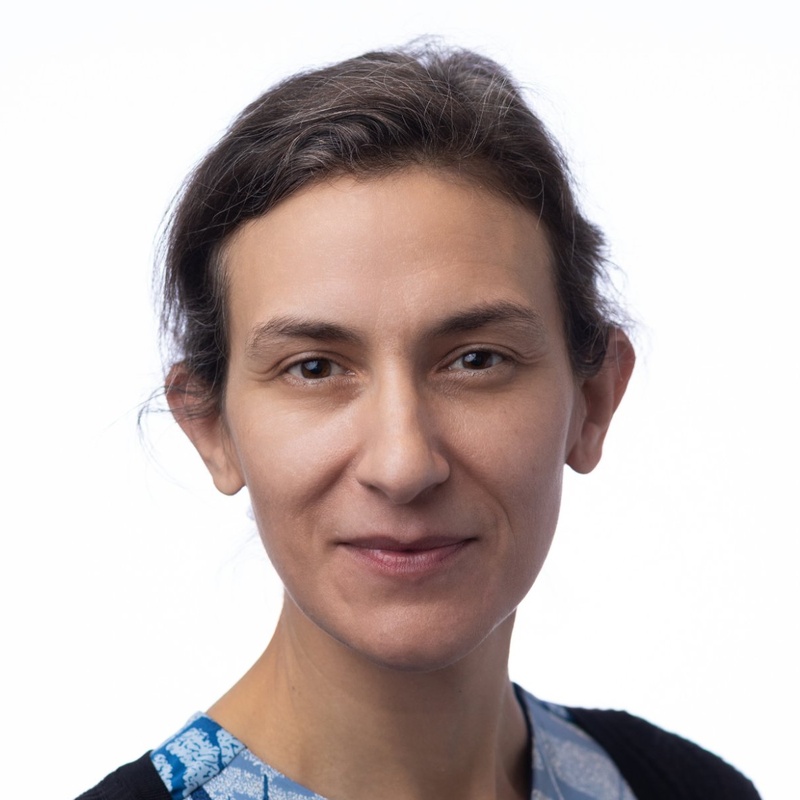
Jessica Rexach’s path to science reflects a blend of curiosity, resilience, and an enduring drive to understand how complex systems fail and how they might be strengthened. Although she did not initially frame her future in scientific terms, Rexach now recognizes that her inclination toward research runs deep. Only later in life did she discover that multiple generations of women in her family had conducted basic science research, including a grandmother who published foundational studies decades before Rexach entered the field.
“I didn’t know this history growing up,” Rexach recalls. “But when I found those papers, it felt like something clicked. In that moment, this drive to ask questions and chase answers found me.”
Rexach spent part of her childhood in a small town near Yosemite National Park, far removed from academic laboratories or large medical centers. With few modern distractions, she developed creativity, independence, and a deep comfort with solitude, traits that would later serve her well in scientific inquiry. She balanced that rural upbringing with time spent in urban environments, gaining an early appreciation for contrast, complexity, and adaptation.
“We let the human data tell us what matters. Then we build models to ask whether we can intervene.”
- Jessica Rexach, MD, PhD
Biography
Jessica Rexach’s path to science reflects a blend of curiosity, resilience, and an enduring drive to understand how complex systems fail and how they might be strengthened. Although she did not initially frame her future in scientific terms, Rexach now recognizes that her inclination toward research runs deep. Only later in life did she discover that multiple generations of women in her family had conducted basic science research, including a grandmother who published foundational studies decades before Rexach entered the field.
“I didn’t know this history growing up,” Rexach recalls. “But when I found those papers, it felt like something clicked. In that moment, this drive to ask questions and chase answers found me.”
Rexach spent part of her childhood in a small town near Yosemite National Park, far removed from academic laboratories or large medical centers. With few modern distractions, she developed creativity, independence, and a deep comfort with solitude, traits that would later serve her well in scientific inquiry. She balanced that rural upbringing with time spent in urban environments, gaining an early appreciation for contrast, complexity, and adaptation.
“We let the human data tell us what matters. Then we build models to ask whether we can intervene.”
- Jessica Rexach, MD, PhD
Research Focus
She carried that curiosity with her to Cornell University, where she embraced the idea of becoming a “Renaissance academic,” someone equally grounded in broad thinking and rigorous analysis. It was during her undergraduate years that Rexach first encountered the physician–scientist model, a career path that immediately resonated.
“I realized I didn’t want to choose between medicine and science,” she explains. “I needed both. Patients give meaning to the questions, and research gives you the tools to answer them.”
Rexach pursued dual MD–PhD training, a demanding path that required sustained focus over years. She completed her clinical and research training at UCLA and also spent time at Caltech through the institution’s Medical Scientist Training Program partnership. The extended trajectory suited her temperament. She valued depth over speed and welcomed the chance to build a strong conceptual and technical foundation.
In 2019, Rexach launched her laboratory at UCLA through a physician–scientist career development award, which enabled her to continue training while establishing an independent research program. Over the next several years, her lab matured into a fully independent operation focused on understanding the molecular and cellular mechanisms underlying cognitive impairment and dementia.
Rexach’s research centers on human brain tissue. This focus reflects her belief in grounding discovery in human biology whenever possible. Advances in single-cell and multi-omic profiling now allow researchers to examine human brain tissue at unprecedented resolution, revealing patterns that animal models alone cannot capture.
“We can finally see what’s happening in the human brain as disease unfolds,” Rexach says. “That changes everything about how we ask questions.”
As part of his training, Leshchiner spent time as a visiting graduate student at MIT in Robert Langer's laboratory, a leader in biomedical engineering. There, he encountered a vibrant, interdisciplinary research culture that fosters curiosity and admiration for scientific integration. Chemists, physicists, biologists, engineers, and physicians worked side by side on problems at the interface of science and medicine.
During this period, Leshchiner worked on lipid-nanoparticle-based delivery systems for short-interfering RNA. This area would later underpin mRNA vaccine technologies. The experience expanded his vision of what chemistry could do when integrated with biology and medicine.
Following his master's and doctoral training in chemistry, Leshchiner transitioned to a different field. As high-throughput sequencing technologies emerged around 2010, he recognized an opportunity to apply quantitative and computational skills to biology on an unprecedented scale. He retrained in computational biology during his postdoctoral work at Harvard, focusing on genomics and human disease. Leshchiner transitioned to genomics, pioneering methods to analyze large-scale sequencing data and advancing cancer genomics research, including non-invasive tumor monitoring.
At the Broad Institute, Leshchiner developed techniques to detect and analyze circulating tumor DNA and RNA, revolutionizing oncology by enabling real-time, non-invasive cancer monitoring and influencing clinical practices worldwide.
Her lab uses large-scale human tissue datasets to identify patterns of gene regulation, chromatin structure, and cellular stress responses across multiple neurodegenerative diseases. Rather than focusing on a single disorder in isolation, Rexach compares different dementias side by side to determine what is shared, what is distinct, and which signals truly drive disease risk.
This comparative approach has led her to a central conceptual framework: neurodegenerative diseases represent failures of resilience rather than singular catastrophic events. In this model, neurons and supporting cells accumulate stress over the course of decades. Some adapt and survive. Others falter.
“What stands out is not just which cells die,” Rexach explains, “but which ones manage to hold on, and why.”
Her team has identified molecular pathways associated with cellular resilience, including systems involved in metabolism, stress response, and chromatin organization. One striking observation is that chromatin structure, the three-dimensional organization of DNA that governs gene expression, begins to deteriorate as disease advances. When that structure weakens, cells lose their ability to regulate genes effectively, accelerating dysfunction.
To test these observations, Rexach combines human tissue analysis with induced pluripotent stem cell models. These models allow her team to recreate disease-associated stress in human-derived neurons and glial cells, then systematically probe which pathways preserve function and which fail.
Half of her lab focuses on generating and analyzing human datasets. The other half works on validating discoveries in experimental systems. This iterative loop between observation and testing defines her approach.
“We let the human data tell us what matters,” she says. “Then we build models to ask whether we can intervene.”
Rexach also maintains an active clinical practice in adult neurogenetics, seeing patients with rare and complex neurological disorders that often involve cognitive impairment. She spends time in the clinic each month and follows patients whose conditions lack clear diagnoses or effective treatments. Her clinical work reinforces the urgency of her research and grounds her scientific questions in patient experience.
“When you sit with patients who have no clear answers,” Rexach says, “you feel the weight of what we don’t yet know.”
In 2024, Rexach received a Toffler Scholar Award, which provided flexible funding for a high-risk, collaborative project at the intersection of chromatin biology and neurodegeneration. The award allowed her to partner with teams at UCSF and Caltech to apply advanced chromatin profiling technologies to models of tau-driven neurodegeneration.
These experiments examine how tau toxicity destabilizes chromatin structure and whether specific molecular modifiers can preserve genomic integrity under stress. The work requires large-scale sequencing and complex computational analysis, yet it holds promise for identifying new therapeutic targets that stabilize cellular resilience rather than simply blocking downstream damage.
“The Toffler support gave us the freedom to move quickly and take a real risk,” Rexach notes. “That kind of flexibility is rare and incredibly valuable.”
Beyond individual projects, Rexach values the Toffler Scholar community as a space for cross-disciplinary exchange. Through the program, she has connected with researchers studying mitochondrial biology, immune signaling, and neurodegeneration from complementary angles.
“No one lab can solve these problems alone,” she says. “Progress happens when ideas collide.”
Looking ahead, Rexach hopes her work will help redefine how neurodegenerative diseases are conceptualized and treated. By focusing on resilience, she aims to identify ways to slow disease progression, preserve cognitive function, and extend quality of life even when cures remain elusive.
For Rexach, science remains both a technical pursuit and a deeply human one. It draws on patience, humility, and the willingness to follow evidence wherever it leads.
“Our job isn’t to be right,” she says. “It’s to ask better questions and keep pushing until the answers start to take shape.”