
Biography
Jie Yang grew up in a rural region of eastern China, near Confucius's birthplace, where education was highly valued. Despite modest circumstances and a lack of academic background, his perseverance and cultural values inspire admiration and pride in his journey.
His father worked in a factory as a metalworker. His mother farmed the land. Neither had the opportunity to pursue higher education, yet both held a firm conviction that their children should. Yang and his sisters grew up in modest circumstances, yet with unwavering encouragement to study, read, and imagine futures beyond their immediate surroundings.
“We didn’t grow up in an academic household,” Yang says. “But we grew up believing that learning mattered.”
A key influence came from his uncle, his father’s younger brother, who became a university history professor. Watching someone from the same family rise through education left a lasting impression. It showed Yang that background did not determine destiny.
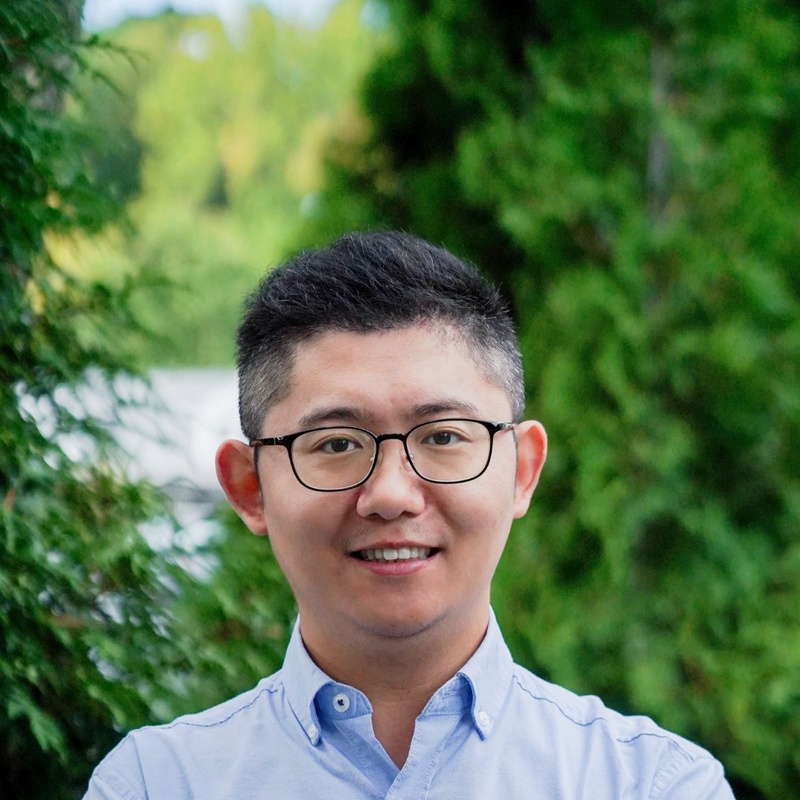
From an early age, Yang gravitated toward science. As a child, he devoured books and watched documentaries about animals, evolution, and dinosaurs. One moment stands out clearly. He picked up his older sister’s biology textbook and opened it to the first page. There, he encountered a sweeping visual narrative of life, from single-celled organisms to complex multicellular forms.
“That page changed everything,” Yang recalls. “I saw the story of life unfolding, and I knew this was what I wanted to study.”
Biography
Jie Yang grew up in a rural region of eastern China, near Confucius's birthplace, where education was highly valued. Despite modest circumstances and a lack of academic background, his perseverance and cultural values inspire admiration and pride in his journey.
His father worked in a factory as a metalworker. His mother farmed the land. Neither had the opportunity to pursue higher education, yet both held a firm conviction that their children should. Yang and his sisters grew up in modest circumstances, yet with unwavering encouragement to study, read, and imagine futures beyond their immediate surroundings.
“We didn’t grow up in an academic household,” Yang says. “But we grew up believing that learning mattered.”
A key influence came from his uncle, his father’s younger brother, who became a university history professor. Watching someone from the same family rise through education left a lasting impression. It showed Yang that background did not determine destiny.
From an early age, Yang gravitated toward science. As a child, he devoured books and watched documentaries about animals, evolution, and dinosaurs. One moment stands out clearly. He picked up his older sister’s biology textbook and opened it to the first page. There, he encountered a sweeping visual narrative of life, from single-celled organisms to complex multicellular forms.
“That page changed everything,” Yang recalls. “I saw the story of life unfolding, and I knew this was what I wanted to study.”
Research Focus
When Yang entered college at the top university in his province, he chose biology without hesitation. He majored in biotechnology and immersed himself in the molecular foundations of life. For the first time, he studied proteins, enzymes, and cellular machinery in detail. Those building blocks became the focus of his scientific identity.
After earning his bachelor’s degree, Yang entered the Institute of Biophysics at the Chinese Academy of Sciences, one of the country’s most prestigious research institutions. There, he encountered biophysics, a discipline that would define his career. The field appealed to him because it used physical principles to explain biological complexity.
“Biology can seem messy. Biophysics brings clarity. It uses physics to reveal the rules behind life.”
— Jie Yang, PhD
He joined a laboratory led by a British scientist, an environment that felt different from more traditional academic settings. The lab emphasized intellectual freedom, interdisciplinary thinking, and international collaboration. That atmosphere shaped Yang’s ambitions and encouraged him to consider a future beyond China.
During his PhD training, Yang specialized in single-molecule biophysics, using advanced techniques to study amyloid protein aggregation. Amyloid aggregation plays a central role in neurodegenerative diseases such as Alzheimer’s disease, Parkinson’s disease, and ALS. Rather than exploring these processes in bulk, Yang examined individual protein molecules, observing how they interacted, clustered, and formed toxic assemblies.
Using fluorescence-based single-molecule approaches, his work revealed early aggregation steps that traditional methods could not detect. His team also identified a short peptide that interfered with specific aggregation pathways, pointing toward potential therapeutic strategies.
In 2018, Yang earned his PhD in biochemistry and molecular biology. After six years in a research environment shaped by Western academic culture, he chose to continue his training abroad.
Yang joined the Department of Cell Biology at Yale University as a postdoctoral fellow, where he expanded his technical repertoire. There, he transitioned from fluorescence-based methods to optical tweezers, a Nobel Prize–winning single-molecule technique that measures forces at the molecular scale.
At Yale, his scientific focus shifted from protein aggregation to neuronal communication. He studied neurotransmission, the process by which neurons communicate through vesicle fusion and neurotransmitter release. Using single-molecule tools, he investigated how proteins and membranes interact to drive synaptic vesicle fusion, a fundamental process underlying thought, movement, and perception.
This work deepened Yang’s interest in membrane biology. He became increasingly fascinated by how membranes function as dynamic interfaces that regulate energy, signaling, and survival in neurons.
As his postdoctoral training progressed, Yang began contemplating the next phase of his career, retraining in mitochondrial biology to deepen his expertise, illustrating his proactive approach and dedication to advancing his scientific journey.
“Mitochondria sit at the center of everything,” he says. “Energy, metabolism, calcium signaling, cell death. If membranes fail there, the consequences are profound.”
Rather than moving directly into a fully independent faculty role, Yang chose a transitional research faculty position that would allow him to retrain in mitochondrial biology. That decision led him to Boston University, where he joined the laboratory of Professor Elijah Painsil, an expert in mitochondrial biology in HIV infection and antiretroviral therapy.
At Boston University, Yang now serves as a research assistant professor, leading independent projects exploring mitochondrial dysfunction in HIV-associated neurocognitive disorders, demonstrating his capacity to drive impactful research and to foster potential collaborations.
Yang’s research centers on communication between mitochondria and the endoplasmic reticulum, particularly at specialized contact sites known as mitochondria-associated membranes. These regions regulate calcium transfer, metabolic signaling, and cell survival. Disruption of this communication can trigger neuronal dysfunction and death.
His hypothesis proposes that HIV viral proteins and antiretroviral drugs disrupt mitochondrial-ER communication, leading to calcium imbalance, oxidative stress, and cognitive impairment. To test this idea, Yang combines two powerful approaches.
First, he uses bottom-up in vitro reconstitution, rebuilding mitochondrial and ER membrane systems outside the cell using synthetic membranes and purified proteins. This approach allows him to isolate key molecular interactions and measure forces, dynamics, and calcium flux with single-molecule precision.
Second, he validates these findings in living neurons, using advanced imaging to observe calcium signaling, protein interactions, and mitochondrial integrity under disease-relevant conditions.
The work is technically ambitious and high-risk. Few laboratories attempt to reconstitute complex membrane interfaces at this level of detail.
The Toffler Scholar Award empowers Yang to pursue innovative, high-risk research, fostering confidence in his potential and the significance of his work in advancing science.
“At this stage of my career, this kind of support is critical,” Yang says. “It gives me the freedom to test ideas that traditional funding might consider too risky.”
Looking ahead, Yang sees his work extending beyond HIV-associated disorders. He believes mitochondrial-ER communication represents a central hub in neuronal health and disease. Disruption of these membrane interfaces may also contribute to Alzheimer’s disease, Parkinson’s disease, and other neurodegenerative conditions, each driven by different external stressors but converging on shared cellular vulnerabilities.
For Yang, science remains a bridge between disciplines and cultures. His career reflects a journey shaped by curiosity, persistence, and a belief in the power of fundamental understanding to illuminate complex disease.
“Life follows rules,” he says. “If we understand those rules at the molecular level, we can begin to change outcomes.”