
BIOGRAPHY
Jonathan Alevy didn’t grow up in one place-or follow a single path. Born in Venezuela, raised in the Caribbean, educated in France, and now conducting research in the United States, his journey has been a mosaic of movement, curiosity, and quiet determination. As a child, he imagined a future in pediatrics, moved by the quiet authority of a doctor who could ease his baby brother’s cries with just a gentle voice and steady hands. But life, as it often does, rewrote the script. Somewhere between deferred dreams and unexpected turns, Jonathan discovered his true calling-not at the bedside, but at the microscope.
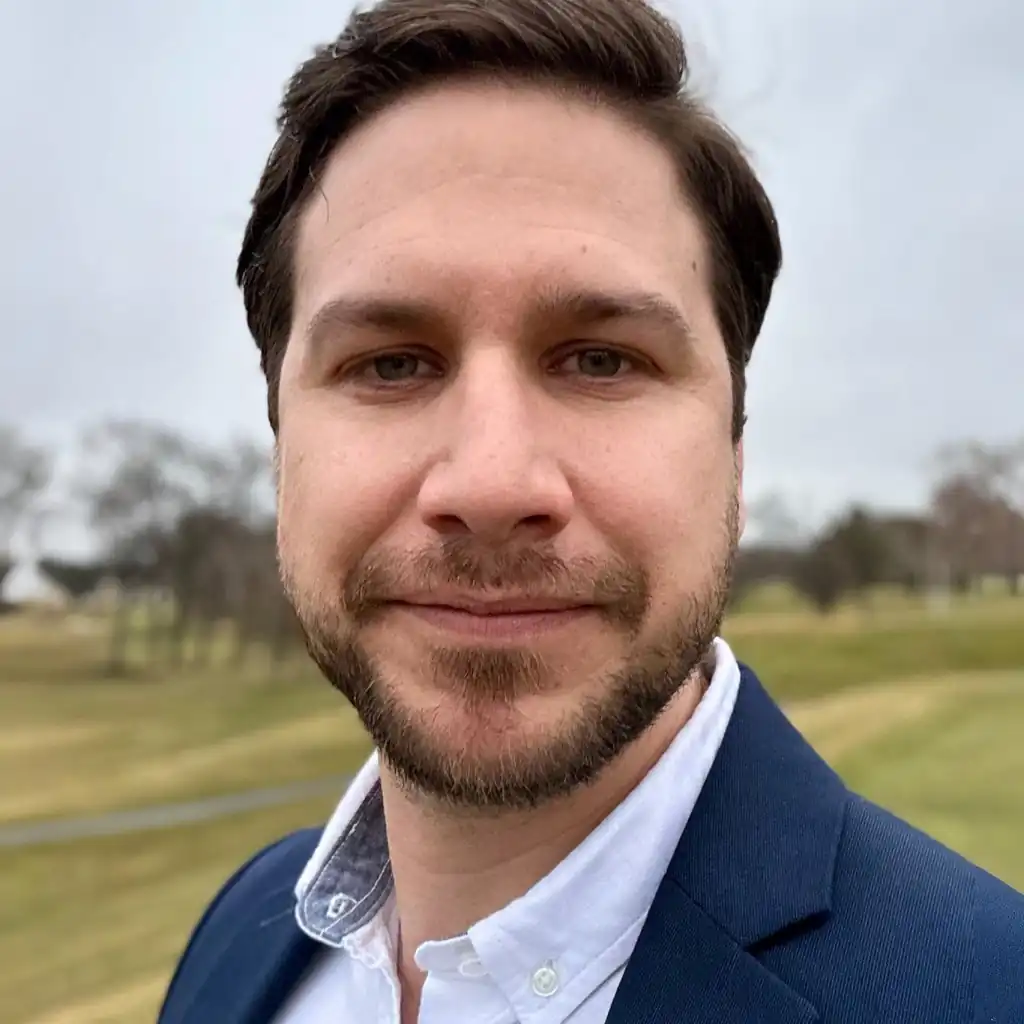
Pediatrician Dreams to Neurodegenerative Discovery: The Journey of Jonathan Alevy
Jonathan Alevy didn’t grow up in one place-or follow a single path. Born in Venezuela, raised in the Caribbean, educated in France, and now conducting research in the United States, his journey has been a mosaic of movement, curiosity, and quiet determination. As a child, he imagined a future in pediatrics, moved by the quiet authority of a doctor who could ease his baby brother’s cries with just a gentle voice and steady hands. But life, as it often does, rewrote the script. Somewhere between deferred dreams and unexpected turns, Jonathan discovered his true calling-not at the bedside, but at the microscope.
A Childhood on the Move
Jonathan’s father worked in the oil industry, which meant a childhood spent on the move. His family chased opportunity across continents, from the Caribbean to Europe to the United States, and along the way, Jonathan became fluent in change. That constant relocation gave him a global perspective and a flexible mindset. Amid the shifting landscapes, a desire to help others quietly took root. When his younger brother, eight years his junior, was soothed by a compassionate pediatrician, something clicked. “The way he could just calm him, make him feel safe… I realized that kind of care could change everything,” Jonathan said. It was a moment that planted the first seed of a future in medicine.
Dreams Interrupted, Paths Redrawn
Jonathan earned his first degree in Cellular Biology in Toulouse, France, a sun-soaked city known for its warmth, olives, and charm, though not always for the global portability of its academic credentials. When he returned to the U.S. in hopes to apply to medical school, he hit an unexpected wall. “They told me, ‘Sorry, your degree isn’t transferable,’” he recalled, the disappointment still faintly audible. It was a hard stop to a long-held dream.
But not the end.
Rather than give up, Jonathan pivoted. He enrolled in a second undergraduate program in Houston, this time focusing on Molecular Biology. At the same time, he began working in a neuroscience laboratory at Baylor College of Medicine, studying the retina, what his PI called “the window into the brain.” There, he discovered the nervous system’s delicate complexity. “The retina is part of the central nervous system, but its layered structure makes it more easier to examine the nervous system,” he said. “It became this incredible window into neural function, a stepping stone into something much bigger.”
“I think we’ll find that microglia initially try to protect the brain, but as the damage spreads, they may end up fueling the degeneration they’re meant to prevent.”
– Jonathan Alevy, PhD Candidate
Falling in Love with Research
Initially, Jonathan joined the laboratory to check a box on his résumé. But as he delved into the world of neurodegeneration, he was drawn in by the intricate choreography of neurons, glial cells, and immune signals, sometimes in delicate balance, sometimes in catastrophic collapse. “Research felt like art,” he said. “And I realized this was where I could make a difference.”
That realization changed everything. Jonathan let go of his plans for medical school and committed fully to a Ph.D. Today, he is a doctoral candidate at Johns Hopkins, working in the lab of Dr. Charlotte Sumner, a clinician-scientist whose dual role in patient care and bench research inspires him every day. The Sumner laboratory studies an ion channel, transient receptor potential vanilloid 4 (TRPV4), which is the only ion channel linked to hereditary motor neuron diseases, with autosomal dominant (or rare recessive) mutations causing distal spinal muscular atrophy (dSMA) and Charcot-Marie-Tooth disease type 2 (CMT2). These disorders lead to weakness in muscles controlled by spinal cord and brainstem motor neurons, including those in the neck, diaphragm, limbs, and vocal cords. While onset age and severity vary, early-onset forms with high lethality are common. Currently, there is no treatment, and no mouse models of TRPV4-related disease exist for therapeutic testing. “My PI works with patients affected by these diseases,” he said. “That connection, between the clinic and the bench, gives our research real purpose. It’s the kind of translational science that could ultimately change lives.”
The Science: Understanding Blood-Brain Barrier Breakdown
Jonathan’s research centers on a critical yet often overlooked player in neurodegeneration: the blood-CNS barrier (BCNSB). In a healthy brain, this barrier acts like a high-security checkpoint, tightly regulating what enters the neural environment. But in diseases like Alzheimer’s disease, amyotrophic lateral sclerosis, multiple sclerosis, traumatic brain and spinal cord injury, and stroke, that protection starts to fail.
“When those blood vessels leak, things that should stay in the bloodstream, such as neurotoxic blood componenets, end up in the brain parenchyma,” Jonathan explained. “That intrusion can trigger inflammation, activate immune responses, and eventually lead to neuronal death.”
At the core of his research are microglia, the brain’s resident immune cells and its first line of defense. But their role in neurodegeneration remains unclear. Are they protective agents, rushing in to contain damage and promote healing? Or do they inadvertently worsen the injury, fueling inflammation and neuronal loss? Jonathan’s work seeks to unravel this complex balance, understanding exactly how microglia behave during disease could reveal new strategies to harness their power for neuroprotection rather than destruction. He is also exploring how microglia interact with other cellular components, either collaborating to support neuron survival or contributing to neuronal death.
A Technological Breakthrough: Spatial Transcriptomics
With support from the Karen Toffler Charitable Trust, Jonathan is using a cutting-edge technique, spatial transcriptomics, to investigate those questions with unprecedented precision.
“This technology allows us to map gene expression at the single-cell level while preserving their precise location within the tissue,” he explained. He slices mouse spinal cords into ultra-thin sections and analyzes them at high spatial resolution, pinpointing the exact time and place where blood vessels begin to break down and how cells interact to that breakdown.
“It’s like eavesdropping on a molecular conversation at the scene of the crime,” he said.
By mapping these early changes, Jonathan hopes to identify new therapeutic target and strategies to guide microglia toward protective roles to reinforce the blood-CNS barrier before neurons are lost for good.
Why It Matters
Jonathan’s research carries implications far beyond the rare disease he studies, Charcot-Marie-Tooth type 2C. The mechanisms he’s uncovering could apply to a wide range of neurodegenerative disorders. “We’re seeing blood-CNS barrier breakdown not just in CMT2C, but also in Alzheimer’s, ALS, even traumatic brain and spinal injury,” he said. “What makes our genetic mouse model unique is that the barrier fails spontaneously, rather than experimentally induced, just like it does in patients.”
That’s a crucial distinction. In many studies, researchers induce BCNSB breakdown artificially, which can oversimplify the complex biology at play. Jonathan’s model, by contrast, mirrors the natural, spontaneous disruption seen in human disease, offering a more accurate window into the earliest events that drive neurodegeneration.
Looking Ahead
Parallel to her Alzheimer’s research, Devon is also exploring the impact of prenatal fentanyl exposure on brain development. Intrigued by how low doses-more akin to real-world exposure-might affect offspring, she discovered surprising social dominance and preference deficits. Further analysis revealed altered gene expression associated with myelin, the brain’s insulation for fast signal transmission.
These findings open up yet another line of inquiry: Could prenatal fentanyl alter neural connectivity? Could co-treatment with myelin-enhancing compounds reverse these effects?
What Drives Her
Whether investigating depression as an early symptom of Alzheimer’s or charting the behavioral impact of synthetic opioids, Devon approaches science with a rare blend of humility and rigor. She embraces the slow, often frustrating pace of discovery, driven by her deep passion for her work. “You can do so much in a year,” she says, “and only have one line to show for it on your CV. That’s science.”
What motivates her is the possibility of filling in the blanks in human understanding of behaviors, disorders, treatments, and timelines. She’s especially drawn to the “when” of brain disease: When do these shifts begin? When can we intervene? When does resilience diverge from vulnerability? Understanding the timing of these events could revolutionize our approach to brain diseases.
Looking Ahead
Jonathan hopes to have preliminary data from his spatial transcriptomics experiments within six months. Over the next year, his goal is to identify which genes are activated in endothelial cells, microglia, and neurons, when the blood-CNS barrier begins to fail, and to determine whether that molecular cascade directly contributes to neuronal death. “I think we’ll find that microglia initially try to protect the brain,” he said, “but as the damage spreads, they may end up fueling the degeneration they’re meant to prevent.”
Ultimately, Jonathan’s work could pave the way for transformative therapies, ones that intervene early, before neurons are lost. By preventing barrier breakdown or reprogramming microglia toward repair, his research has the potential to shift the entire landscape of neurodegenerative disease treatment.
A Scholar with Heart
Through it all, Jonathan remains both humble and deeply grateful. “Receiving this funding felt like validation, that what I’m doing matters,” he said. “Without the support of the Karen Toffler Charitable Trust, this part of my research wouldn’t have been possible.”
He’s eager to connect in person with the Toffler Scholar community and hopes to attend the next Exeloop gathering. Looking ahead, he plans to share his findings more broadly and build a network of peers, collaborators, and future supporters.
Jonathan’s journey began with a simple desire: to comfort children in distress. That impulse hasn’t changed, it’s just evolved. Today, he’s not a pediatrician soothing fears in an exam room. He’s a scientist, investigating the brain’s molecular machinery, working to prevent suffering before it ever begins.