
Katherine Turk, MD, PhD
2025 Toffler Scholar | Assistant Professor of Neurology, Boston University
Biography
Katherine Turk traces her scientific identity to a single afternoon in college. As an undergraduate at the University of Chicago, she enrolled in a required science course taught by a practicing neurologist. One day, the professor brought a patient with Parkinson’s disease into the lecture hall. In front of fifty students, he explained what was going wrong inside the man’s brain and how that damage translated into tremor, rigidity, and loss of control. The patient spoke, answered questions, and put a human face on neural circuitry.
That day changed everything for me,” Turk recalls. “It suddenly felt possible to understand the brain and help people at the same time.”
The class also assigned Oliver Sacks’ The Man Who Mistook His Wife for a Hat. For Turk, the book's stories mirrored what she had just witnessed. Patients’ lives, their symptoms, and the science behind them are intertwined. By the end of the term, she no longer thought of herself as a humanities student who happened to be taking science. She began to imagine a future in neurology.
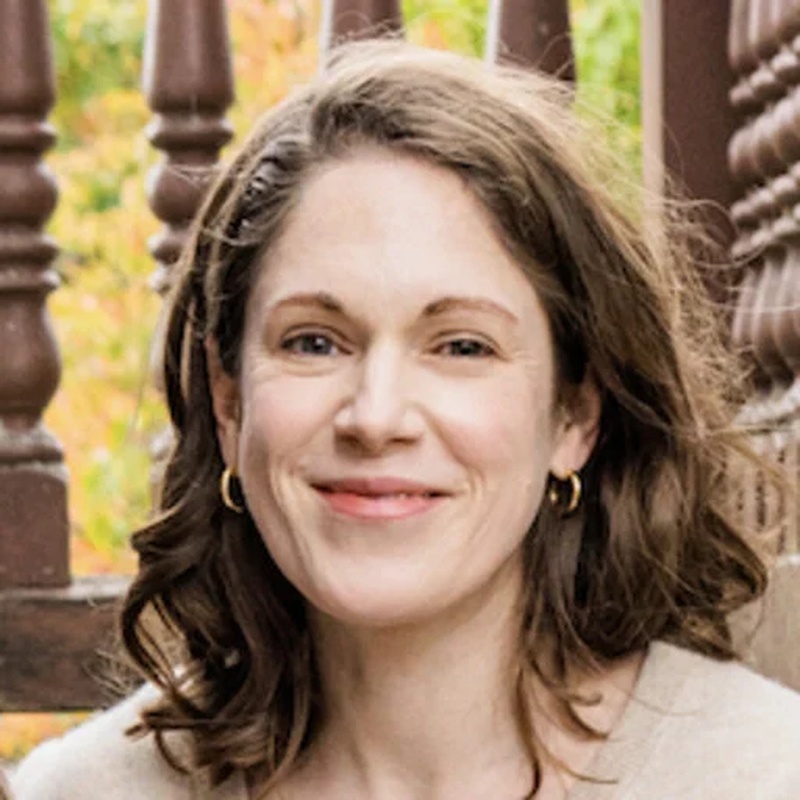
Turk grew up in a family oriented toward service rather than science. Her father worked as a social worker. Her mother served as a school principal. Together, they emphasized education, empathy, and helping others. Those values translated naturally to medicine, even though no one in her family had pursued a scientific career. Her younger sister, now a journalist and podcast producer, brought storytelling into the household, reinforcing the idea that human narratives matter.
“I think that combination of service and storytelling is still what drives me,” Turk says.
Biography
Katherine Turk traces her scientific identity to a single afternoon in college. As an undergraduate at the University of Chicago, she enrolled in a required science course taught by a practicing neurologist. One day, the professor brought a patient with Parkinson’s disease into the lecture hall. In front of fifty students, he explained what was going wrong inside the man’s brain and how that damage translated into tremor, rigidity, and loss of control. The patient spoke, answered questions, and put a human face on neural circuitry.
That day changed everything for me,” Turk recalls. “It suddenly felt possible to understand the brain and help people at the same time.”
The class also assigned Oliver Sacks’ The Man Who Mistook His Wife for a Hat. For Turk, the book's stories mirrored what she had just witnessed. Patients’ lives, their symptoms, and the science behind them are intertwined. By the end of the term, she no longer thought of herself as a humanities student who happened to be taking science. She began to imagine a future in neurology.
Turk grew up in a family oriented toward service rather than science. Her father worked as a social worker. Her mother served as a school principal. Together, they emphasized education, empathy, and helping others. Those values translated naturally to medicine, even though no one in her family had pursued a scientific career. Her younger sister, now a journalist and podcast producer, brought storytelling into the household, reinforcing the idea that human narratives matter.
“I think that combination of service and storytelling is still what drives me,” Turk says.
Research Focus
After college, Turk took time to deepen her research experience before medical school. She moved to Boston and joined a research group at Massachusetts General Hospital studying HIV-associated dementia using magnetic resonance spectroscopy. The team examined chemical changes in brain tissue in both patients and non-human primate models. The work demanded rigor, creativity, and patience.
“That was when I realized I didn’t just want to see patients,” she explains. “I wanted to ask questions that could move the field forward.”
She went on to earn her medical degree at Tufts University School of Medicine. She completed neurology residency at the University of Washington in Seattle. Throughout training, she continued to publish and collaborate, often treating research as an essential companion to clinical work rather than an extracurricular.
Returning to Boston for a fellowship, Turk found a mentor who showed her what a physician-scientist career could look like without a PhD. Andrew Butson, a neurologist and researcher, modeled how to compete for grants, build a lab, and ask ambitious questions while remaining clinically grounded. Over the next decade, their relationship evolved from mentorship to collaboration.
“Seeing someone with my training succeed in research made it feel possible for me,” Turk says.
Today, Turk serves as an Assistant Professor of Neurology at Boston University and practices at the VA Boston Healthcare System, leading a research program focused on Alzheimer’s disease where clinical care and discovery inform each other in real time.
Early in her career, Turk concentrated on diagnosis. For years, Alzheimer’s disease relied on clinical exams and cognitive tests that often detected the disease only after significant brain damage occurred. That landscape changed rapidly with the arrival of blood biomarkers and imaging tools that reveal amyloid and tau pathology earlier.
As diagnostic tools improved, Turk shifted her attention to a new challenge: prognosis. She aims to provide more precise answers for patients and families, fostering hope and shared purpose in the community.
“That question comes up in every clinic,” Turk says. “And we don’t have good data to guide people.”
Her Toffler-supported project tackles that gap using electroencephalography, or EEG. EEG measures brain activity in real time through sensors placed on the scalp. Unlike blood tests or imaging, it captures neural network communication at the millisecond scale.
Turk takes a different approach by examining EEG “microstates,” spatial patterns that reflect how large-scale brain networks organize and reconfigure over time, offering a window into the brain’s functional architecture.
“Microstates let us see the orchestra, not just individual instruments."
- Katherine Turk, MD, PhD
With support from the Toffler Scholar Award, Turk is collecting longitudinal EEG data from patients with early-stage Alzheimer’s disease. Participants undergo EEG recordings at baseline and again after 1 year, along with standard cognitive testing. By pairing changes in microstates with changes in memory and function, Turk aims to determine whether brain network dynamics predict future decline.
Her team already leverages large patient cohorts at the BU Alzheimer’s Disease Research Center and the VA, where hundreds of individuals return annually for evaluations. The Toffler funding supports expanding this impactful work and inspires colleagues to join her in advancing Alzheimer's research.
“We had everything else in place,” Turk says. “We just needed the resources to bring patients in and collect the data.”
Turk’s long-term vision extends beyond prediction. She sees EEG microstates as a tool for understanding lived experience across the spectrum of dementia. In advanced stages, when patients can no longer communicate, an EEG may reveal whether brain networks still respond to voices, music, or emotional cues.
“Even when someone can’t speak, their brain may still be reacting,” she says. “We want to understand what remains.”
Her work also opens doors to intervention. Turk collaborates on behavioral and neuromodulatory studies, including mindfulness training and emerging brain-stimulation approaches. By pairing these interventions with EEG microstates, she hopes to identify whether therapies truly strengthen brain networks over time.
Machine learning plays a central role in this effort. EEG generates enormous datasets. Turk partners with computational collaborators, including a prior Toffler Scholar, to apply advanced models that extract predictive patterns from every millisecond of recording.
“We used to throw away most of this data,” she says. “Now we can let the algorithms see everything.”
Looking ahead, Turk plans to expand her work through larger federal grants that combine EEG with functional MRI, capturing both timing and spatial localization of brain activity. The Toffler project serves as a springboard, generating the preliminary data needed to secure those awards.
For Turk, the ultimate goal remains deeply human. She wants patients and families to plan their lives with clarity rather than uncertainty. She wants clinicians to move beyond hand-waving and toward evidence-based guidance.
“When someone asks what their future looks like,” she says, “they deserve an answer grounded in the brain itself.”