
Biography
Biography
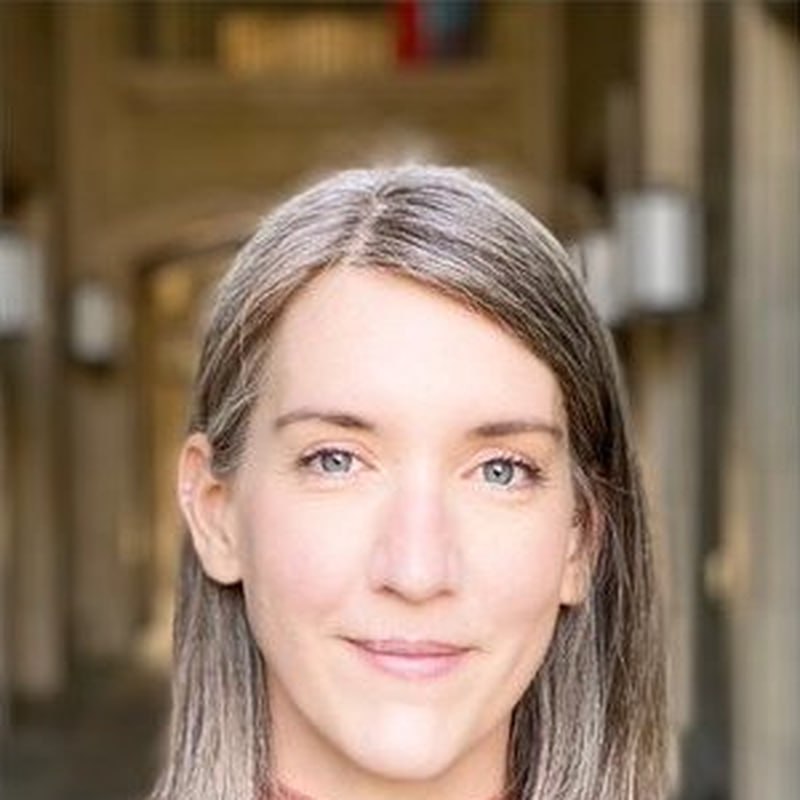
Kimberly Paul grew up in Southern California, where an early fascination with biology and human health began to take shape. A Los Angeles County native, she spent her childhood observing the rhythms of everyday life in a region defined by both natural beauty and environmental complexity. By high school, she was already thinking seriously about a future in biomedical research, drawn to questions about how the world around us shapes long-term health.
Two experiences proved especially formative. In high school, Paul took an environmental science course that examined how ecological systems, pollution, and human exposures influence disease. Around the same time, her grandmother was diagnosed with Parkinson’s disease. Together, these experiences left a lasting impression.
“I didn’t stop thinking about how environmental exposures affect health after that,” Paul says. “And seeing Parkinson’s up close made the questions feel urgent and personal.”
Research Focus
Paul pursued her undergraduate degree in integrative biology, deepening her interest in the biological foundations of disease. She initially considered medical school but felt increasingly drawn to research and population-level questions. To deepen her training in environmental health, she enrolled in a Master of Public Health program at UCLA.
It was there that she met epidemiologist Dr. Beate Ritz, whose work on environmental exposures and Parkinson’s disease profoundly shaped Paul’s trajectory. Under Ritz’s mentorship, Paul realized that she could pursue rigorous biomedical research without becoming a physician.
“She helped me see that if I wanted to understand disease mechanisms and help patients at scale, epidemiology was the right path,” Paul reflects.
Paul went on to earn her PhD in epidemiology, laying the foundation for a career that combined environmental science, population health, and neurodegenerative disease research. Paul's core motivation-understanding why some develop Parkinson’s while others do not-aims to inspire confidence in her dedication and purpose.
After completing her doctoral training, Paul joined the faculty at UCLA, where she established her independent research program in 2021. Her lab focuses on identifying environmental risk factors for Parkinson’s disease and, critically, on understanding what makes specific individuals vulnerable while others remain resilient.
Parkinson’s disease affects roughly one percent of people over the age of 60. While genetics contributes to risk, it explains only about 30 percent of cases. Much of the remaining risk arises from environmental and lifestyle factors, yet exposure alone does not guarantee disease.
“That gap is what drives my work,” Paul explains. “Even among people with high exposure to known risk factors, only a small fraction develop Parkinson’s. The question is why.”
Paul’s research centers on pesticides, not because they are the only environmental risk factor, but because they provide a uniquely powerful model system. California maintains detailed records of commercial pesticide applications dating back to the 1970s. By linking this data to lifetime residential histories for thousands of study participants, Paul and her collaborators can reconstruct decades of exposure with remarkable precision.
Using this approach, her team analyzed pesticide exposure data from more than 3,000 individuals, including approximately 1,200 Parkinson’s patients and 1,500 matched controls living in California’s Central Valley. Rather than preselecting individual chemicals, Paul conducted an untargeted analysis of nearly every pesticide applied in the region over 50 years.
That work revealed approximately 50 pesticides that Parkinson’s patients experienced at significantly higher levels than controls. Follow-up studies with experimental collaborators showed that roughly a quarter of these chemicals directly damage dopamine neurons, the cell type most affected in Parkinson’s disease.
Identifying toxic exposures, however, represents only one piece of the puzzle. Paul’s lab also collects extensive biospecimens from study participants, including blood, saliva, urine, and stool samples. Because field-based research limits access to invasive procedures, these samples allow her team to probe immune function, genetics, epigenetics, metabolism, and the gut microbiome.
“We’re trying to understand how exposure translates into biology,” Paul says. “What pathways get disrupted, and how do those disruptions differ between people who develop disease and those who don’t?”
One primary focus of Paul’s work involves systemic inflammation and mitochondrial dysfunction, two biological processes increasingly implicated in neurodegeneration. Her analyses suggest that environmental exposures may act as triggers. At the same time, inflammatory and metabolic changes serve as facilitators that push vulnerable individuals toward disease.
Paul also examines how Parkinson’s progresses over time. Her team follows patients longitudinally, tracking motor symptoms, cognitive decline, and biological markers. This approach allows her to identify exposures and biomarkers associated not just with disease onset, but with faster progression and greater severity.
Demographic change represents another critical dimension of her work. Over multiple study waves spanning two decades, Paul has observed shifts in the racial and ethnic makeup of the study population that reflect broader changes in California. Her analyses reveal that Hispanic Parkinson’s patients tend to receive diagnoses at younger ages, present with more severe symptoms, and receive less treatment on average.
“These disparities matter,” Paul emphasizes. “They shape outcomes, and they point to gaps in care and understanding that we need to address.”
Her ongoing analyses suggest that earlier disease onset may reflect a combination of higher environmental exposure and distinct genetic or epigenetic profiles, underscoring the importance of studying diverse populations.
"We’re trying to understand how exposure translates into biology. What pathways get disrupted, and how do those disruptions differ between people who develop disease and those who don’t?”
- Kimberly Paul, PhD
In 2024, Paul received a Toffler Scholar Award, which provided flexible funding to advance high-risk, high-impact projects that traditional grants often struggle to support. The award enabled her to sustain key personnel and pursue innovative multi-omics analyses that integrate environmental exposure data with molecular biomarkers.
One Toffler-supported project examines how epigenetic changes across multiple tissues relate to alpha-synuclein pathology, a hallmark of Parkinson’s disease. Another explores how pesticide exposure alters the metabolome, revealing disruptions in lipid metabolism and mitochondrial function that may precede clinical symptoms.
“These are the kinds of questions that need exploratory funding,” Paul notes. “The Toffler support lets us move faster and ask bolder questions.”
Paul sees her work as part of a broader effort to move Parkinson’s research upstream. Neurodegenerative diseases often unfold over decades, with pathological changes beginning long before symptoms appear. By identifying environmental triggers and early biological shifts, she hopes to open new windows for prevention and intervention.
She also places substantial value on collaboration and interdisciplinary science. Through the Toffler Scholar community, Paul has connected with researchers studying immune dysfunction, sleep disorders, mitochondrial biology, and neurodegeneration across institutions.
“No one solves these problems alone,” she says. “The biology is too complex. Progress comes from connecting perspectives.”
Looking ahead, Paul aims to translate her findings into actionable insights that improve the quality of life and extend healthy years for people at risk of Parkinson’s disease. For her, the work remains grounded in both science and humanity, shaped by personal experience, rigorous data, and a deep commitment to understanding why disease unfolds differently from one person to the next.