
Biography
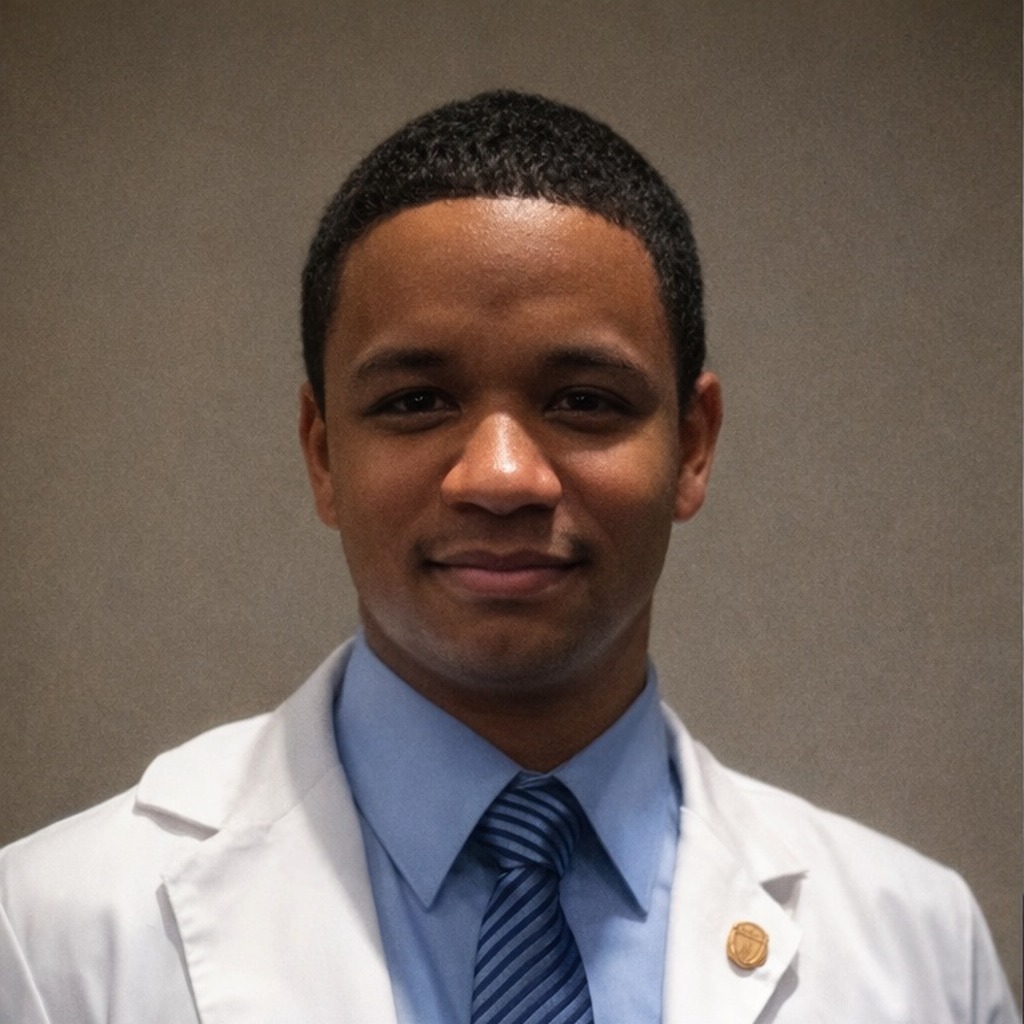
Dr. Chikwem’s path into neurology was shaped early by family influences and lived experience, inspiring admiration and respect for his dedication. Raised in a household where education mattered deeply, he grew up watching his father, a microbiologist, work through scientific problems. At the same time, his mother, an educator, reinforced the discipline and curiosity that learning demands. Science was not abstract in his home. It was something people did, questioned, and returned to, day after day.
“I always knew I wanted to do something in science,” Dr. Chikwem says. “I just didn’t know exactly what that would look like at first.”
As an undergraduate at Lincoln University, Mark searched for a research direction during his first year. A chance opportunity led him into a neuroscience laboratory, where he worked with primary rat neurons. There, he encountered tau biology for the first time, introducing mutant tau proteins into neurons and watching how they disrupted cellular function. The project required him to learn quickly, not only new experimental techniques but also the fundamentals of Alzheimer’s disease itself, especially tau and amyloid pathology.
That summer proved decisive. What began as an unfamiliar topic became a lasting fascination. Dr. Chikwem immersed himself in the literature on dementia, tau, and amyloid, and the questions stayed with him long after the project ended.
"It never left," he says. "I just kept coming back to dementia. I kept wanting to understand it better.
Biography
Dr. Chikwem’s path into neurology was shaped early by family influences and lived experience, inspiring admiration and respect for his dedication. Raised in a household where education mattered deeply, he grew up watching his father, a microbiologist, work through scientific problems. At the same time, his mother, an educator, reinforced the discipline and curiosity that learning demands. Science was not abstract in his home. It was something people did, questioned, and returned to, day after day.
“I always knew I wanted to do something in science,” Dr. Chikwem says. “I just didn’t know exactly what that would look like at first.”
As an undergraduate at Lincoln University, Mark searched for a research direction during his first year. A chance opportunity led him into a neuroscience laboratory, where he worked with primary rat neurons. There, he encountered tau biology for the first time, introducing mutant tau proteins into neurons and watching how they disrupted cellular function. The project required him to learn quickly, not only new experimental techniques but also the fundamentals of Alzheimer’s disease itself, especially tau and amyloid pathology.
That summer proved decisive. What began as an unfamiliar topic became a lasting fascination. Dr. Chikwem immersed himself in the literature on dementia, tau, and amyloid, and the questions stayed with him long after the project ended.
"It never left," he says. "I just kept coming back to dementia. I kept wanting to understand it better.
Research Focus
After completing his undergraduate degree, Mark remained at Lincoln University for two additional years, continuing his research training. Although the work did not ultimately lead to publication, it deepened his commitment to neurology. It clarified his desire to work directly with patients. He entered medical school at Penn State College of Medicine to become a neurologist.
During medical school, Dr. Chikwem sought every available opportunity to engage with neurology faculty, but institutional limitations shaped his experience. Penn State did not have a dedicated cognitive neurology division at the time, limiting his exposure to dementia research and specialized clinical training. Rather than deterring him, this gap reinforced his resolve to pursue advanced training elsewhere.
He completed his neurology residency at Albany Medical Center, where he found the mentorship he had been seeking. The program included cognitive neurologists who emphasized both clinical rigor and compassion. Under their guidance, Mark spent most of his elective time working with patients with dementia, learning to diagnose complex cases and, just as importantly, to support families and caregivers.
“Caregivers are part of the clinical picture,” he explains. “If they burn out, patients suffer. You have to take care of both.”
Although residency left little time for formal research, the experience shaped Dr. Chikwem’s clinical identity. He learned how dementia unfolds in real lives, how limited current treatment options remain, and how urgently new approaches are needed. By the end of residency, he knew that clinical care alone would not be enough.
“If I’m not doing research,” he says, “I don’t feel like I’m truly helping my patients.”
That conviction led him to Columbia University for fellowship training in cognitive neurology. At Columbia, he entered a research-intensive environment that expects clinicians to ask scientific questions alongside patient care. There Mark entered a system that values discovery as an essential component of patient care.
If I’m not doing research, I don’t feel like I’m truly helping my patients.
– Ndubisi (Mark) Chikwem
During his fellowship, Dr. Chikwem pursued additional training in epidemiology and data analysis, teaching himself statistical tools such as SPSS to work with large-scale datasets. He became increasingly interested in a clinical observation that had followed him from residency: the intersection between late-onset seizures and dementia.
Epilepsy and dementia rarely appear together in traditional frameworks. Yet, Mark repeatedly encountered older patients who developed seizures without clear causes such as stroke or trauma. At the same time, growing evidence suggested that amyloid pathology might lower seizure thresholds in the aging brain.
His research asks whether late-onset seizures and dementia share a bidirectional relationship. Do seizures increase the risk of cognitive decline? Or do early neurodegenerative changes increase seizure susceptibility?
To explore this question, Dr. Chikwem uses data from the National Alzheimer’s Coordinating Center. This longitudinal dataset includes tens of thousands of participants across the United States. By tracking individuals who develop seizures later in life and following their cognitive trajectories over time, he aims to identify patterns that could signal earlier disease processes.
The work is complex and imperfect. Not all cohorts include biomarker data, and participants report seizure histories without clinical confirmation. Yet the scale of the dataset enables Mark to ask questions that smaller studies cannot.
“This is about finding signals,” he explains. “Not definitive answers yet, but patterns that tell us where to look next.”
Receiving the Toffler Scholar Award is recognition of the importance of his research. It provides Dr. Chikwem with protected time, a rare and valuable resource for clinician–scientists. The funding supports his ability to complete ongoing analyses, develop new hypotheses, and prepare future grant applications, which motivates the audience to see the impact of dedicated support on advancing research.
“This grant gave me time,” he says. “Time to think, to analyze, and to move the research forward instead of doing it in the margins.”
In the years ahead, Mark hopes to incorporate biomarker data, imaging techniques, and experimental models to test whether amyloid-driven network dysfunction contributes to late-onset seizures. Confirming this could lead to earlier identification of at-risk individuals and targeted interventions before cognitive decline becomes clinically evident.
He also remains deeply aware of the broader systemic challenges facing cognitive neurology. Demand for dementia specialists continues to grow, while training pipelines remain limited. In his own clinic, wait times for new patients stretch months into the future, underscoring the urgent need for both more clinicians and better treatments.
Dr. Chikwem sees research and clinical care as inseparable. Each informs the other. Every unanswered question in the clinic becomes a motivation to return to the data.
For him, the work remains grounded in purpose. It reflects a career shaped not by convenience, but by persistence, mentorship, and a refusal to accept that “there is nothing more we can do.”
“There has to be more,” he says. “And if we don’t look for it, we’ll never find it.”