
R. Stefan Isaac, PhD
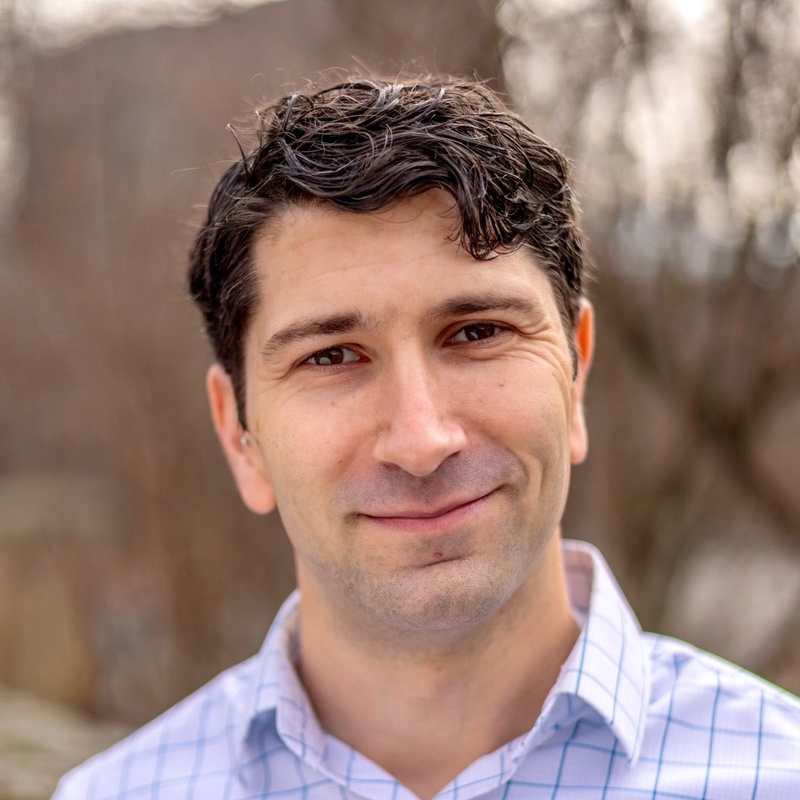
2025 Toffler Scholar | Assistant Professor, Boston University School of Medicine
Biography
R. Stefan Isaac did not initially imagine a career in scientific research. Raised in East Tennessee, he came from a family without formal ties to academic science. His earliest exposure came primarily through his mother, a mathematics teacher who recognized his aptitude early and encouraged his curiosity. She had begun graduate work in genetics before changing paths, and her interest in the subject quietly shaped the environment in which Isaac grew up.
“I think I ended up in science because I was good at it and I enjoyed it,” Isaac reflects. “But before college, I honestly didn’t know what a scientist actually did for a living.”
That uncertainty shifted when he arrived at Brandeis University. Curious about research but unsure of his future, Isaac reached out to faculty members to learn what laboratory work involved. Two professors, Dr. Greg Petsko and Dr. Dagmar Ringe, took a chance on him, offering a position in a lab studying bacterial proteins that regulate toxin production in pathogens such as Corynebacterium diphtheriae. For the first time, Isaac encountered science not as a subject, but as a profession.
During his undergraduate training, he immersed himself in protein biochemistry and gene regulation, studying how individual proteins regulate gene expression in bacteria. His mentors also helped him understand what it meant to pursue a career in science, encouraging him to apply to doctoral programs and guiding him through the process.
Biography
R. Stefan Isaac did not initially imagine a career in scientific research. Raised in East Tennessee, he came from a family without formal ties to academic science. His earliest exposure came primarily through his mother, a mathematics teacher who recognized his aptitude early and encouraged his curiosity. She had begun graduate work in genetics before changing paths, and her interest in the subject quietly shaped the environment in which Isaac grew up.
“I think I ended up in science because I was good at it and I enjoyed it,” Isaac reflects. “But before college, I honestly didn’t know what a scientist actually did for a living.”
That uncertainty shifted when he arrived at Brandeis University. Curious about research but unsure of his future, Isaac reached out to faculty members to learn what laboratory work involved. Two professors, Dr. Greg Petsko and Dr. Dagmar Ringe, took a chance on him, offering a position in a lab studying bacterial proteins that regulate toxin production in pathogens such as Corynebacterium diphtheriae. For the first time, Isaac encountered science not as a subject, but as a profession.
During his undergraduate training, he immersed himself in protein biochemistry and gene regulation, studying how individual proteins regulate gene expression in bacteria. His mentors also helped him understand what it meant to pursue a career in science, encouraging him to apply to doctoral programs and guiding him through the process.
Research Focus
Isaac moved to California to complete his doctoral training under the mentorship of Dr. Geeta Narlikar at the University of California, San Francisco. There, he transitioned from bacterial systems to eukaryotic cells, studying how suites of proteins silence large regions of the genome inside the nucleus. The work deepened his interest in gene regulation. It sharpened his technical expertise, but it also clarified what he wanted next. He tried to broaden his toolkit and learn the emerging genomic and computational approaches transforming biology.
That goal brought him back to Boston, where he joined the laboratory of Dr. Stirling Churchman at Harvard Medical School for postdoctoral training. There, Isaac encountered a genome he had never studied before: the mitochondrial genome. Unlike nuclear DNA, which exists in just two copies per cell, mitochondrial DNA exists in hundreds or even thousands of copies, with each copy potentially varying in sequence, mutational burden, and activity.
“I naively assumed mitochondrial DNA biology had already been worked out,” Isaac says. “It’s a tiny genome. I thought there was no way there were major unanswered questions left about how its gene expression and replication are controlled.”
What he discovered instead was a field rich with open questions. Despite decades of study, scientists still lack a clear understanding of how mitochondrial genomes are regulated, how mutations accumulate, and why specific tissues, particularly neurons and muscle, prove uniquely vulnerable to mitochondrial dysfunction.
Looking back, Isaac recognizes a consistent thread running through his work. Throughout his career, he has studied how organisms regulate genes, moving from bacterial pathogens to nuclear genomes and, ultimately, to mitochondria. Mitochondria represent a living evolutionary bridge, having originated as bacteria and still retaining their own genome inside modern eukaryotic cells. That insight continues to guide his research.
In 2024, Isaac launched his independent laboratory at Boston University School of Medicine, focusing on understanding how cells regulate mitochondrial DNA transcription and replication across thousands of copies, aiming to uncover fundamental mechanisms of cellular health.
A central focus of Isaac’s work is understanding why defective mitochondrial genomes persist. Over a lifetime, neurons can accumulate mitochondrial DNA deletions that remove thousands of bases. When these deletions cross a threshold, cells lose their ability to produce sufficient energy, contributing to neurodegeneration and age-related decline. Yet cells appear unable to eliminate these damaged genomes efficiently.
“That’s one of the biggest mysteries. If these genomes are broken, why don’t cells get rid of them?”
— R. Stefan Isaac, PhD
With support from the Toffler Scholar Award, which recognized his promising research, Isaac is developing experimental systems using induced pluripotent stem cell–derived neurons. This demonstrates how his funding enables innovative approaches and underscores the importance of his research.
To do this, the lab leverages third generation long-read sequencing technologies, including Pacific Biosciences and Oxford Nanopore platforms. These tools allow researchers to read entire mitochondrial genomes in single molecules, revealing how mutations co-occur and how genome structure influence’s function. The resulting datasets are massive, often reaching terabyte scale, and require advanced computational approaches to interpret.
Isaac’s team combines sequencing with machine learning to identify patterns that would otherwise go unnoticed. By layering information about DNA sequence, replication timing, and genome packaging, they aim to uncover the rules governing mitochondrial genome selection.
Isaac emphasizes that embracing intellectual humility is essential for scientific progress, encouraging an open-minded approach to understanding complex biological systems.
“Our job as scientists is to build models that we fully expect to be wrong or at least incomplete,” he says. “That’s how we learn. Being wrong isn’t failure. It’s progress.”
Looking ahead, Isaac hopes his work will provide foundational insight into how mitochondrial dysfunction contributes to neurological disease and aging, highlighting his contributions to understanding why defective genomes accumulate and how cells tolerate them for so long.
He is also deeply committed to collaboration, recognizing that progress often emerges at the boundaries between disciplines. Through connections fostered by the Toffler Scholar program, Isaac has begun cross-disciplinary conversations linking mitochondrial biology with neuroscience, genomics, and data science.
For Isaac, the work is both deeply technical and profoundly human. It reflects a career shaped not by a single predetermined plan, but by curiosity, mentorship, and a willingness to follow questions wherever they lead.