
Sung Soo Kim, PhD
2025 Toffler Scholar | Professor of Molecular, Cellular, and Developmental Biology, UC Santa Barbara
FIND ME ON
Biography
From an early age, Sung Soo Kim imagined himself as a physicist. Growing up in South Korea, he excelled in physics and mathematics throughout elementary, middle, and high school, convinced that understanding the fundamental laws of nature would be his path forward.
Numbers and equations came naturally, and the logic of physical systems appealed to him deeply.
As he prepared to apply for college, however, a high school teacher offered advice that quietly altered his trajectory. Rather than pursue physics directly, the teacher urged Kim to study electrical engineering, warning that a career in pure physics could be challenging to sustain. Kim took the advice. He entered an electrical engineering program, believing it would still keep him close to the analytical world he loved while offering practical grounding.
College quickly clarified his strengths. Kim found himself drawn to applied mathematics and computation rather than abstract proof-based mathematics. He struggled with theoretical algebra but excelled in areas like signal processing, operating systems, and compiler design. Within electrical engineering, he gravitated toward software and computer science, discovering that programming offered a creative way to build systems that behaved intelligently.
Near the end of his undergraduate studies, Kim faced a defining choice. He could enter the industry or continue in academia. A single seminar resolved the question. The talk focused on artificial intelligence and a problem that seemed deceptively simple: how the brain separates objects from background in visual scenes. Humans perform this task effortlessly, yet computers at the time could barely approximate it.
“That question stayed with me for weeks,” Kim recalls. “How can the brain solve problems so easily that computers struggle with?”
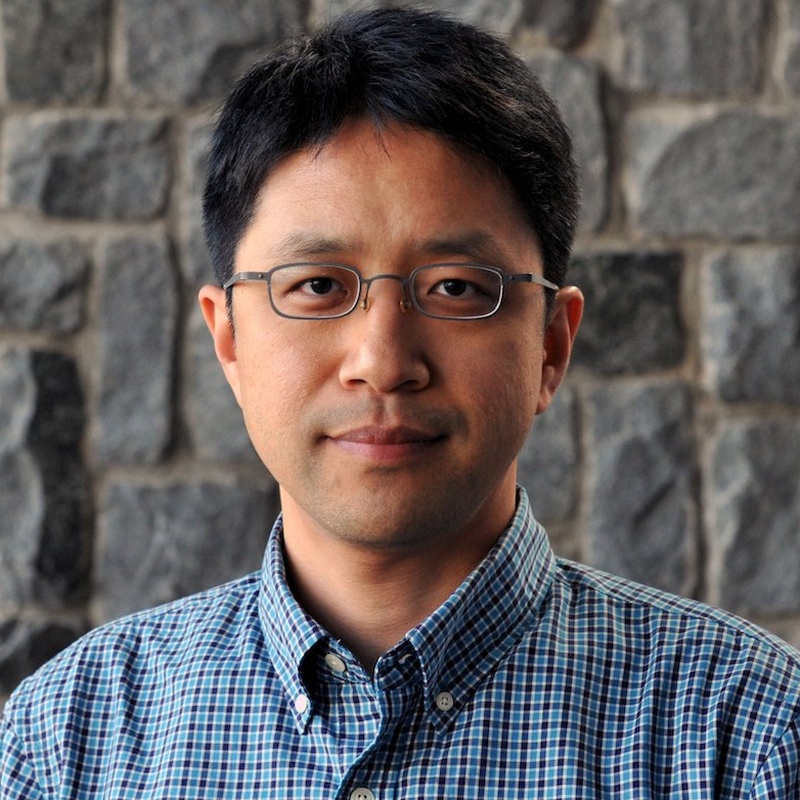
Motivated by that puzzle, Kim pursued graduate work in artificial neural networks at Seoul National University in the late 1990s. In retrospect, he arrived during what would later be called the “AI winter,” a period when neural networks lacked the computational power needed to flourish. Although interest waned, the experience taught him a critical lesson. Artificial systems could imitate aspects of intelligence, but they still fell short of biological reality.
Kim began to wonder whether the real answers lay not in artificial networks, but in biological ones. That curiosity led him to neuroscience, a field that was barely a formal discipline in Korea at the time. With guidance from a senior colleague who had trained in the United States, Kim began preparing for a significant transition, one that required learning an entirely new scientific language.
Before he could leave the country, Kim had to fulfill South Korea’s mandatory military service. He chose an unconventional route, joining an overseas volunteer program modeled after the Peace Corps. The assignment took him to northern Thailand, near the Golden Triangle region, where he taught computer science at a rural teachers’ university. For two years, Kim taught programming, computer architecture, and assembly language, learned Thai, and built teaching tools for his students.
Biography
From an early age, Sung Soo Kim imagined himself as a physicist. Growing up in South Korea, he excelled in physics and mathematics throughout elementary, middle, and high school, convinced that understanding the fundamental laws of nature would be his path forward.
Numbers and equations came naturally, and the logic of physical systems appealed to him deeply.
As he prepared to apply for college, however, a high school teacher offered advice that quietly altered his trajectory. Rather than pursue physics directly, the teacher urged Kim to study electrical engineering, warning that a career in pure physics could be challenging to sustain. Kim took the advice. He entered an electrical engineering program, believing it would still keep him close to the analytical world he loved while offering practical grounding.
College quickly clarified his strengths. Kim found himself drawn to applied mathematics and computation rather than abstract proof-based mathematics. He struggled with theoretical algebra but excelled in areas like signal processing, operating systems, and compiler design. Within electrical engineering, he gravitated toward software and computer science, discovering that programming offered a creative way to build systems that behaved intelligently.
Near the end of his undergraduate studies, Kim faced a defining choice. He could enter the industry or continue in academia. A single seminar resolved the question. The talk focused on artificial intelligence and a problem that seemed deceptively simple: how the brain separates objects from background in visual scenes. Humans perform this task effortlessly, yet computers at the time could barely approximate it.
“That question stayed with me for weeks,” Kim recalls. “How can the brain solve problems so easily that computers struggle with?”
Motivated by that puzzle, Kim pursued graduate work in artificial neural networks at Seoul National University in the late 1990s. In retrospect, he arrived during what would later be called the “AI winter,” a period when neural networks lacked the computational power needed to flourish. Although interest waned, the experience taught him a critical lesson. Artificial systems could imitate aspects of intelligence, but they still fell short of biological reality.
Kim began to wonder whether the real answers lay not in artificial networks, but in biological ones. That curiosity led him to neuroscience, a field that was barely a formal discipline in Korea at the time. With guidance from a senior colleague who had trained in the United States, Kim began preparing for a significant transition, one that required learning an entirely new scientific language.
Before he could leave the country, Kim had to fulfill South Korea’s mandatory military service. He chose an unconventional route, joining an overseas volunteer program modeled after the Peace Corps. The assignment took him to northern Thailand, near the Golden Triangle region, where he taught computer science at a rural teachers’ university. For two years, Kim taught programming, computer architecture, and assembly language, learned Thai, and built teaching tools for his students.
Research Focus
After returning to Korea, Kim completed his remaining service by conducting research at an electrical engineering laboratory that developed neural recording electrodes. There, a mentor helped him name what he was seeking. The questions Kim wanted to ask belonged to systems neuroscience, the study of how networks of neurons give rise to perception, cognition, and behavior. With that clarity, he applied to graduate programs in the United States and accepted an offer from Johns Hopkins University.
Kim entered neuroscience as an engineer, and the transition proved difficult. Early rotations exposed him to molecular neuroscience, a world of pathways and channels he initially memorized without fully understanding. He worked on primate somatosensory experiments in the late Steven S. Hsiao’s lab, solving technical challenges and collecting data, but felt uncertain about how to analyze his results scientifically.
A single statistics course changed everything. Taught by psychologist Amy Shelton, the class focused on analysis of variance and experimental design. For the first time, Kim learned not just how to run analyses, but why scientists design experiments the way they do.
“That class completely changed how I thought about science,” Kim says. “That was the moment I transitioned from engineer to scientist.”
He realized that much of the data he had already collected was unusable because he had not planned the statistical tests. Quietly, he redesigned his experiments. More importantly, he learned that science was not about solving problems quickly, but about asking questions precisely.
Kim’s doctoral years taught him a second lesson just as powerful. Through collaboration with a colleague, the late Dr. Bensmaia, whose recordings were immaculate, Kim saw firsthand that data quality mattered more than quantity. High signal-to-noise recordings enabled insight. Poor data, no matter how abundant, did not.
Kim carried those lessons forward. As he neared graduation, he confronted a growing frustration. Experiments in primates revealed fascinating neural phenomena, but existing tools could rarely answer how those phenomena emerged. Most studies described what neurons did, where they fired, and when they fired. Few explained the mechanism.
Seeking a system where causality could be tested directly, Kim made a bold decision. He joined a Drosophila neuroscience laboratory (led by Dr. Vivek Jayaraman) at the Howard Hughes Medical Institute’s Janelia Research Campus, entering the field of fly systems neuroscience just as powerful genetic and imaging tools were emerging.
The timing proved extraordinary. New technologies allowed researchers to access and manipulate specific neuron types across the entire fly brain. Kim’s postdoctoral work rode the crest of that wave. Using flies, he helped demonstrate how abstract computational models of cognition are physically implemented in real neural circuits, answering the “how” questions that had motivated him for years.
His work became highly influential in systems neuroscience, providing foundational insights into how the brain represents direction during navigation, a remarkably conserved system across species, from insects to mammals.
Kim now leads a research group at UCSB, a hub for fly neuroscience, fostering collaboration and advancing understanding of neural systems.
With support from the Toffler Scholar Award, Kim is developing a new imaging platform that dramatically expands the ability to record neural activity in freely moving animals over extended periods. Traditional microscopes limit both the field of view and the recording duration. Kim’s system tracks the animal’s position in real time, keeping the brain within view while capturing neural dynamics over days or weeks.
This approach opens new possibilities for studying aging and neurodegeneration. Loss of spatial orientation is one of the earliest signs of Alzheimer’s disease. Kim studies navigation circuits in flies, which share core architectural features with mammalian systems, to understand how these circuits change over time.
Karen Toffler Charitable Trust (KTCT) funding supports both the engineering and data infrastructure needed to scale these experiments. Kim hopes the work will illuminate how circuit dynamics evolve with age and offer new hypotheses relevant to human disease.
For Kim, the project represents the culmination of a long intellectual journey, from physics to engineering, from artificial intelligence to biological intelligence.
“I’ve always wanted to answer how networks of neurons behave,” he reflects. “Now I finally feel like I’m in a position to do that.”