
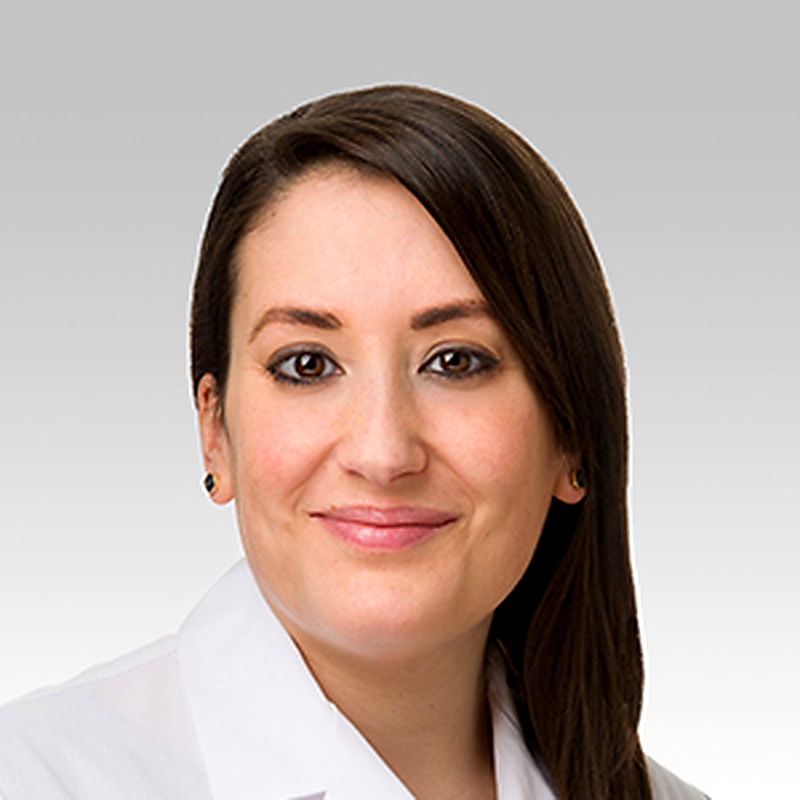
Tamar Gefen, PhD
2024 Toffler Scholar | Associate Professor of Psychiatry and Behavioral Sciences, Northwestern University Feinberg School of Medicine
Biography
Deep curiosity about meaning, identity, and how people make sense of the world drove Tamar Gefen into neuroscience.
As a young student, Gefen initially gravitated toward religion and philosophy, drawn to questions about belief, morality, and the human condition. She studied in Israel and seriously considered pursuing an academic career in the humanities. Yet over time, she grew restless with explanations that felt abstract or detached from lived experience.
“I started to feel frustrated,” she recalls. “I wanted answers that connected directly to people’s lives, not just ideas.”
That turning point led her toward psychology and, eventually, neuroscience. Gefen realized that many of the philosophical questions she cared about—identity, memory, selfhood—ultimately depended on the brain. Understanding belief requires understanding biology. Meaning lived inside neural systems.

Biography
Deep curiosity about meaning, identity, and how people make sense of the world drove Tamar Gefen into neuroscience.
As a young student, Gefen initially gravitated toward religion and philosophy, drawn to questions about belief, morality, and the human condition. She studied in Israel and seriously considered pursuing an academic career in the humanities. Yet over time, she grew restless with explanations that felt abstract or detached from lived experience.
“I started to feel frustrated,” she recalls. “I wanted answers that connected directly to people’s lives, not just ideas.”
That turning point led her toward psychology and, eventually, neuroscience. Gefen realized that many of the philosophical questions she cared about—identity, memory, selfhood—ultimately depended on the brain. Understanding belief requires understanding biology. Meaning lived inside neural systems.
“I didn’t want to study just to study, I wanted my work to help someone.”
– Dr. Tamar Gefen, PhD
Research Focus
Gefen pursued research training at Georgetown University, where she worked as a research assistant studying reading disorders in stroke patients. The experience grounded her intellectually. She saw how damage to specific brain regions altered language, behavior, and identity. More importantly, she realized she wanted to study not for knowledge alone, but for impact.
“I didn’t want to study just to study,” she says. “I wanted my work to help someone.”
That conviction shaped her decision to pursue clinical neuropsychology, a field that bridges brain structure and human behavior. Gefen entered doctoral training at Northwestern University Feinberg School of Medicine, where she specialized in clinical neuropsychology with a focus on neurodegenerative disease. She learned to evaluate cognition across the lifespan, working directly with patients experiencing memory loss, behavioral change, and dementia.
her training, Gefen’s personal life intersected profoundly with her professional interests. Her grandmother developed Alzheimer’s disease at a relatively young age. Watching cognitive decline unfold within her own family gave new urgency to her work. It sharpened her sensitivity to what patients and families endure.
“Losing cognition means losing parts of who you are,” she explains. “That’s terrifying. It stays with you.”
After completing her PhD, Gefen remained at Northwestern, where she built a career that integrates clinical care, research, and mentorship. She now works at the Mesulam Institute for Cognitive Neurology and Alzheimer’s Disease, one of the nation’s federally designated Alzheimer’s Disease Research Institute. The institute follows hundreds of participants longitudinally, collecting cognitive, behavioral, imaging, blood, and genetic data over many years.
Gefen’s research explores why some individuals develop dementia while others stay cognitively resilient into very old age, highlighting her focus on understanding protective factors.
To answer it, she links detailed cognitive assessments collected during life with postmortem brain tissue donated after death. This approach allows her to connect behavior, memory, and personality to underlying neuropathology with exceptional precision. Nearly all participants at the center commit to donating their brains, creating one of the richest datasets of its kind in the world.
Gefen studies Alzheimer’s disease and related dementias such as Lewy body disease and frontotemporal degeneration. She also studies “SuperAgers,” individuals over age 80 whose memory rivals that of people decades younger. By comparing brains from individuals with severe cognitive impairment, typical aging, and exceptional resilience, she seeks to identify mechanisms that protect cognition.
One focus of her work involves a protein called TDP-43, which researchers recently identified in a large proportion of Alzheimer’s brains. Long considered separate from classic Alzheimer’s pathology, TDP-43 now appears to act as a powerful modifier of disease severity. Gefen examines how TDP-43 interacts with plaques, tangles, inflammation, and synaptic loss to shape memory outcomes. The assistance of funding from the Karen Toffler Charitable Trust led to a five year award to sustain and build the research program on TDP-43 from the NIH.
Her work does not stop at identifying damage. She also studies preservation. SuperAgers sometimes show significant pathology but remain cognitively intact. Gefen investigates what distinguishes their brains at the cellular and network levels, examining synapses, neuronal density, and inflammatory responses.
“What fascinates me is not just why cognition fails,” she says, “but why it sometimes doesn’t.”
Gefen’s work sits at a rare intersection. She understands patients in life and studies their brains in death. She moves fluently between clinical evaluation, cognitive theory, and neuropathology. That perspective has led her to advocate for what she calls translational neuropsychology. This discipline unites structure and function rather than treating them as separate domains.
In 2024, Gefen received a Toffler Scholar Award, which provided flexible funding to accelerate a high-risk, high-reward project examining how TDP-43 contributes to cognitive decline across aging trajectories. The award supports advanced tissue analysis, expansion of SuperAger comparisons, and the hiring of dedicated research personnel.
Just as importantly, the award validated an approach that does not fit neatly into traditional funding categories.
“The Toffler community values questions that sit between fields,” Gefen says. “That matters, especially early on.”
Beyond her own research, Gefen places deep value on mentorship and access. She directs and contributes to programs that bring high school and undergraduate students from underrepresented backgrounds into brain research. At Northwestern, she helps run initiatives that allow students to work directly in the brain bank, handle tissue, and see neuroscience as tangible rather than abstract.
By mentoring students and fostering interdisciplinary paths, Gefen aims to inspire the next generation and build a more inclusive, innovative neuroscience community.
ahead, Gefen aims to expand her research globally, incorporate more diverse populations into dementia research, and build collaborations that extend beyond traditional academic boundaries. She envisions a future in which cognitive aging research reflects the full spectrum of human experience.
For Gefen, science remains inseparable from meaning. It is both technical and deeply human, shaped by loss, curiosity, and the desire to preserve identity across time.
“To understand the brain,” she says, “we have to understand the person. And to understand disease, we have to understand what resilience looks like.”